Environmental News Archive




 The Transocean manager of the doomed Deepwater Horizon offshore drilling rig told a board of inquiry on Thursday that BP officials aboard the rig wanted to skip required pressure tests and tried to impose a drilling plan sent from BP's Houston headquarters that had not been approved by the federal government's Minerals Management Service.
Rig's manager says BP tried to skip test, changed drilling plan
Gulf well 'shouted' warnings for hours before BP rig explosion
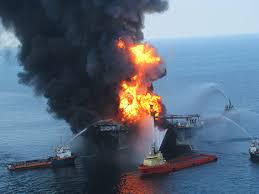 The crew of the Deepwater Horizon had a number of warning signs extending over five hours that conditions were worsening deep underwater before the oilrig exploded in the Gulf on April 20, BP's own investigators told a House inquiry into the cause of the deadly accident.
Details of BP's internal investigation provide fresh information about the extent of failures on the ill-fated rig, but the oil company's inquiry skirts the central question: why were those warnings ignored?
Polar bears face 'tipping point' due to climate change
 Climate change will trigger a dramatic and sudden decline in the number of polar bears, a new study has concluded. The research is the first to directly model how changing climate will affect polar bear reproduction and survival.
Based on what is known of polar bear physiology, behaviour and ecology, it predicts pregnancy rates will fall and fewer bears will survive fasting during longer ice-free seasons.
BP refuses EPA order to switch to less-toxic oil dispersant
 Reporting from Los Angeles and Elmer’s
BP has rebuffed demands from government officials and environmentalists to use a less-toxic dispersant to break up the oil from its massive offshore spill, saying that the chemical product it is now using continues to be "the best option for subsea application."
Nature Conservancy faces potential backlash from ties with BP
 What De Leon didn't know was that the Nature Conservancy lists BP as one of its business partners. The organization also has given BP a seat on its International Leadership Council and has accepted nearly $10 million in cash and land contributions from BP and affiliated corporations over the years.
"Oh, wow," De Leon said when told of the depth of the relationship between the nonprofit she loves and the company she hates. "That's kind of disturbing."
BP withholds oil spill facts — and government lets it
 BP, the company in charge of the rig that exploded last month in the Gulf of Mexico, hasn't publicly divulged the results of tests on the extent of workers' exposure to evaporating oil or from the burning of crude over the gulf, even though researchers say that data is crucial in determining whether the conditions are safe.
Less Toxic Dispersants Lose Out in BP Oil Spill Cleanup
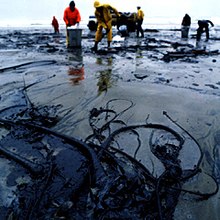 BP PLC continues to stockpile and deploy oil-dispersing chemicals manufactured by a company with which it shares close ties, even though other U.S. EPA-approved alternatives have been shown to be far less toxic and, in some cases, nearly twice as effective.
NOAA: Warmest April Global Temperature on Record
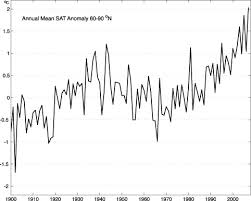 The combined global land and ocean surface temperature was the warmest on record for both April and for the period from January-April, according to NOAA. Additionally, last month’s average ocean surface temperature was the warmest on record for any April, and the global land surface temperature was the third warmest on record.
The monthly analysis from NOAA’s National Climatic Data Center, which is based on records going back to 1880, is part of the suite of climate services that NOAA provides government, business and community leaders so they can make informed decisions.
Lizard extinctions blamed on global warming
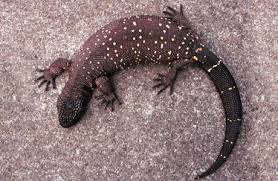 When it comes to the hazards of global warming, it may turn out that lizards in burrows are the canaries in the coal mine.
In a study to be published Friday in the journal Science, an international team of biologists reports that in more than one-tenth of the places in Mexico where lizards flourished in 1975 the reptiles now cannot be found. The researchers predict that by 2080 about 40 percent of local lizard populations worldwide will have died off, and 20 percent of lizard species will be extinct.
More Articles...
Page 130 of 158