Energy Glance
Poor management and critical mistakes by BP and its contractors led to the largest offshore oil spill in U.S. history, according to the final report of the largest U.S. government probe into last year's massive Gulf oil spill.
Investigators from the U.S. Coast Guard and Bureau of Ocean Energy Management scattered blame for the accident on the companies involved while also saying stronger regulations could have helped prevent the catastrophe.
Final U.S. report lays Gulf spill blame on BP, contractors
Risk of radioactive leak after deadly explosion at French nuclear plant
 A furnace at a nuclear-waste incinerator in southern France exploded Monday, killing one person and injuring four others.
The oven, used to melt low-level radioactive waste, blew up and caught fire, but no radioactive or chemical leaks occurred, said power company Electricite de France SA, whose subsidiary operates the furnace.
Canadian producers set own fracking guidelines
 The Canadian Association of Petroleum Producers released a set of principles to govern the controversial practice of hydraulic fracturing used to release vast reserves of natural gas.
CAPP's guidelines emphasize water management and improved disclosure of water and fluid practices for the technique of hydraulic fracturing, more commonly known as fracking, which involves massive amounts of water, sand and chemicals injected at high pressure to fracture rock and release natural gas.
Quake's jolts were double nuke plant's design
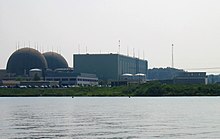 The 5.8-magnitude earthquake last month in Virginia caused about twice as much ground shaking as a nearby nuclear power plant was designed to withstand, according to a preliminary federal analysis.
Parts of the North Anna Power Station in Mineral, Va., 11 miles from its epicenter, endured jolts equal to 26% of the force of gravity (0.26g) from some of the vibrations unleashed by the quake, said Scott Burnell, spokesman of the Nuclear Regulatory Commission.
Quake risk to U.S. reactors greater than thought
 The risk that an earthquake would cause a severe accident at a U.S. nuclear plant is greater than previously thought, 24 times as high in one case, according to an Associated Press analysis of preliminary government data. The nation's nuclear regulator believes a quarter of America's reactors may need modifications to make them safer.
The threat came into sharp focus last week, when shaking from the largest earthquake to hit Virginia in 117 years appeared to exceed what the North Anna nuclear power plant northwest of Richmond was built to sustain.
Japanese breakthrough will make wind power cheaper than nuclear
 The International Clean Energy Analysis (ICEA) gateway estimates that the U.S. possesses 2.2 million km2 of high wind potential (Class 3-7 winds) — about 850,000 square miles of land that could yield high levels of wind energy. This makes the U.S. something of a Saudi Arabia for wind energy, ranked third in the world for total wind energy potential.
Let's say we developed just 20 percent of those wind resources — 170,000 square miles (440,000 km2) or an area roughly 1/4 the size of Alaska — we could produce a whopping 8.7 billion megawatt hours of electricity each year (based on a theoretical conversion of six 1.5 MW turbines per km2 and an average output of 25 percent. (1.5 MW x 365 days x 24 hrs x 25% = 3,285 MWh's).
Quake risk to U.S. reactors greater than thought
The risk that an earthquake would cause a severe accident at a U.S. nuclear plant is greater than previously thought, 24 times as high in one case, according to an Associated Press analysis of preliminary government data. The nation's nuclear regulator believes a quarter of America's reactors may need modifications to make them safer.
The threat came into sharp focus last week, when shaking from the largest earthquake to hit Virginia in 117 years appeared to exceed what the North Anna nuclear power plant northwest of Richmond was built to sustain.
More Articles...
Page 12 of 41