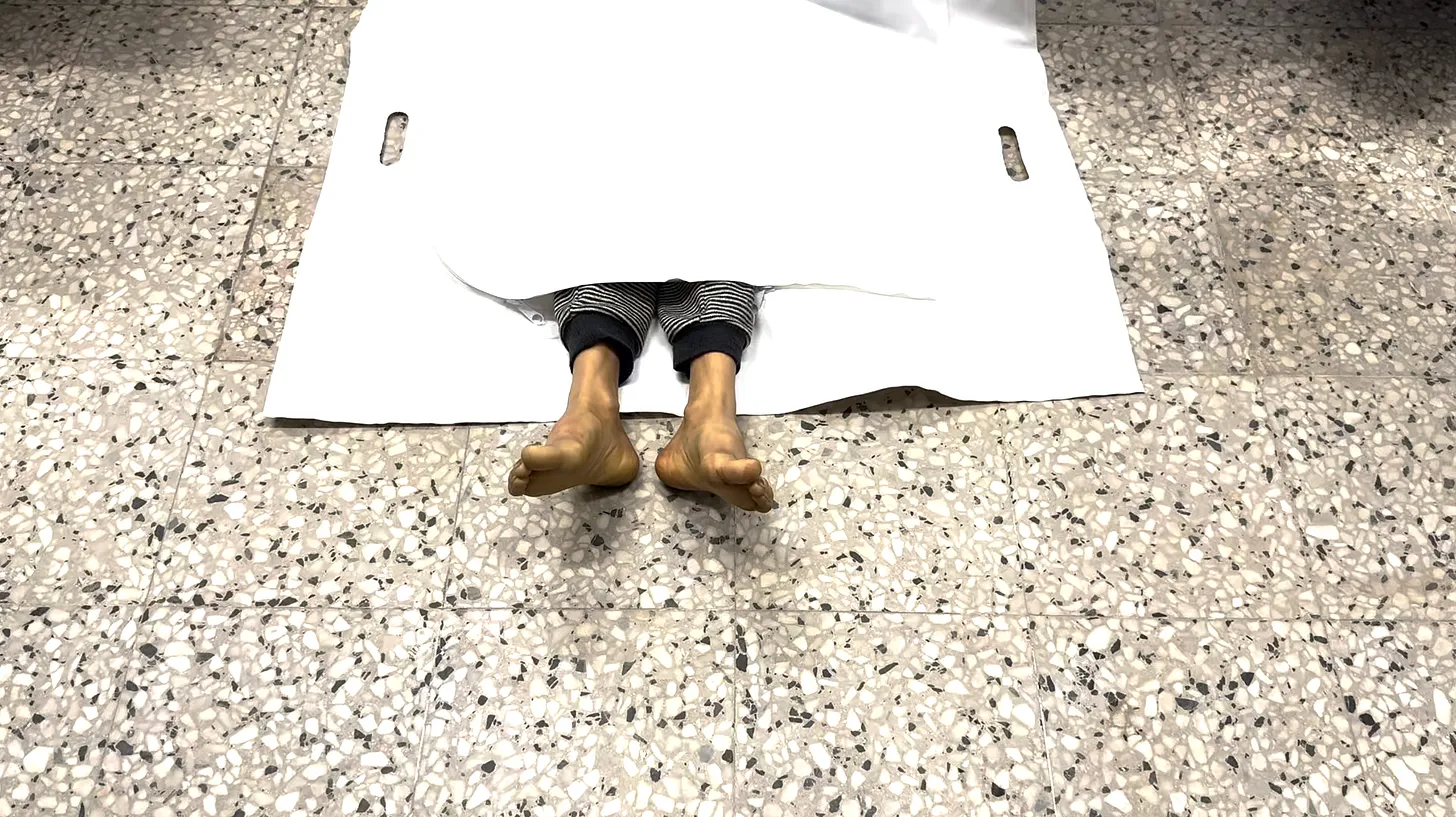
 Eleven-year-old Hamsa Housou lay dead on a cold metal table at the morgue in Al-Shifa hospital. Blood covered her face and the upper part of her striped pajamas as one of her relatives gently wiped her mouth and cheek with a damp cloth, crying as he did so. She had been asleep in her bed early Thursday morning when she was fatally struck by Israeli gunfire. Her family’s home in Jabaliya, west of the so-called yellow line, is in an area designated as safe.
“We were sleeping, and suddenly, around 5 a.m., there were bangs—loud bangs and shells,” Hamsa’s uncle, Aouni Housou, said, standing over her small body. “I live upstairs, and there was screaming. We ran downstairs and they said the girl had been injured. We went to see her and she was covered in blood.” It took half an hour for an ambulance to arrive. When they finally reached the hospital, Hamsa had died.
The eleven-year-old was just one of as many as 14 Palestinians, including five children, killed in Israeli attacks across the Gaza Strip over the past 24 hours, according to an Al Jazeera toll. Since the so-called ceasefire went into effect on October 10, Israel has killed Palestinians in Gaza on an almost daily basis. The missile strikes, shootings, and shelling occur in areas both east of the yellow line, which Israeli troops are occupying as part of the initial agreement, and west of it, where the majority of Palestinians are crammed into less than half of Gaza’s territory. At least 425 Palestinians have been killed and over 1,200 wounded over the past three months of the “ceasefire”—a rate of nearly five Palestinians killed every day.
“Every night there is bombing, shooting, fire belts, robots. Every night. Shrapnel hits our home. What ceasefire? This ceasefire is just theater in front of the world. What caused them to kill her?” Housou said, pointing at his dead niece, unable to hold back the tears.
While much of the world’s attention has turned away from Gaza since the “ceasefire” took hold, the genocide has continued, with daily Israeli military attacks and heavy restrictions on life essentials, including medical supplies, food, building materials, and other items.
Over the course of a single day—overnight on Wednesday into Thursday evening—the Israeli military targeted residential homes, schools sheltering displaced Palestinians, and tent encampments. In Mawasi Khan Younis, an area close to the sea, two separate airstrikes killed four Palestinians in their tents on the beach, according to the Palestinian news agency Wafa.
Another Palestinian was killed when Israeli forces bombed a tent sheltering displaced people in the Al-Attar area of Khan Younis. In the Jabaliya refugee camp, two Palestinians were killed when Israeli forces struck the Abu Hussein School, which was sheltering several displaced families. In the Al-Tuffah neighborhood northeast of Gaza City, an Israeli airstrike slammed into a residential building, killing two and wounding five.
More...

 International Glance
 European troops were arriving in Greenland on Thursday in a show of support, as leaders scrambling to respond to President Donald Trump’s threats were thrown another American curveball.
 Russian strikes damaged the Polish consulate in the southern Ukrainian city of Odesa overnight, according to Poland’s Foreign Ministry spokesman Maciej Wewiór.
 Ukraine was a priority, not the priority, as Germany’s foreign minister Johann Wadephul touched down in Washington early this week.
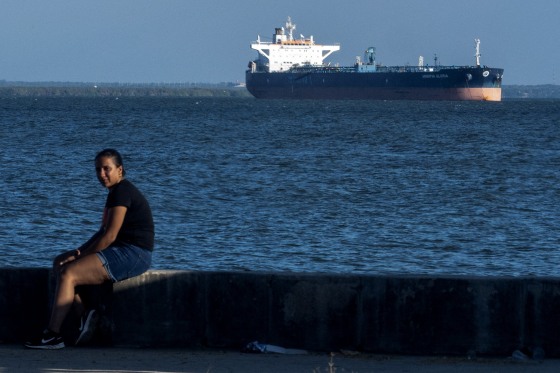 At least four tankers, most of them loaded, that had departed from Venezuela in early January in "dark mode" — or with their transponders off amid a strict U.S. blockade — are now back in the South American country’s waters, according to state company PDVSA and monitoring service TankerTrackers.com.