Science Glance
 Time to look up, stargazers – there’s going to be a planetary "kiss" on June 9.
You'll be able to spot the two brightest planets, Jupiter and Venus, with the naked eye at about 45 minutes after sunset on June 9. Mercury will be nearby as well. They will appear at their closest point of the convergence at 9:35 p.m. ET, according to EarthSky. The planets will trace the ecliptic plane, an imaginary line in the sky that marks the sun’s path. The moon and planets follow this same line.
Venus and Jupiter appear to align about once every 13 months, so the next time they meet in the sky will be on Aug. 5, 2027, but they’ll be obscured by the sun's light. The next visible rendezvous is expected to occur on Nov. 10, 2028, according to SkyandTelescope.
How to get the best view.
Using a set of binoculars will help, according to SkyandTelescope. Both planets will fit within the same field of vision, though it's preferable to watch this celestial spectacle without magnification. That means you can simply use your eyes.
A celestial optical illusion.
While they may look close in the sky, Venus and Jupiter are actually millions of miles apart.
 Standing in his laboratory, Harvard professor Sean Eddy gazes at a row of vacant work stations. More than a year ago, this lab was filled with over a dozen researchers. On a given day they might be working independently on analyzing genomic sequencing or gathered around the group table, drinking coffee and helping each other troubleshoot questions about genomic data from different species.
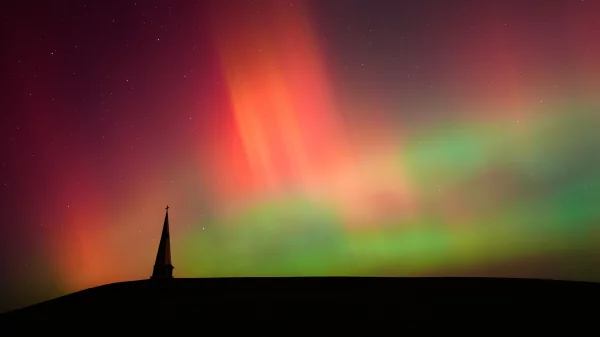 Brilliant splashes of green, purple and pink will streak the night sky for many stargazers in North America on Saturday and Sunday night, as energized particles from space collide with the Earth's atmosphere to create the dazzling effect, known as the Northern Lights or aurora borealis.
 Officials are investigating whether a huge fire that destroyed a top marine science laboratory at the University of South Florida may have been caused by a lightning strike.
 The highest levels of the federal government are paying attention to a list of people who have gone missing or died, citing concerns about their connections to scientific research, some of it potentially classified.
 The US military said it killed four more people in a boat strike in the eastern Pacific ocean on Tuesday, marking the third deadly attack on vessels in the region in four days.