The Supreme Court on Monday ruled that juveniles who commit crimes in which no one is killed may not be sentenced to life in prison without the possibility of parole. The ruling expanded a principle the court has never endorsed outside the death penalty — that an entire class of offenders may be immune from a given form of punishment.
Five justices, in an opinion by Justice Anthony M. Kennedy, agreed that the Eighth Amendment’s ban on cruel and unusual punishment forbids sentences of life without parole as a categorical matter for juvenile offenders who do not participate in homicides.
“A state need not guarantee the offender eventual release,” Justice Kennedy wrote, “but if it imposes the sentence of life, it must provide him or her with some realistic opportunity to obtain release before the end of that term.”
Chief Justice John G. Roberts Jr. endorsed only a case-by-case approach, but he voted with the majority in saying that the particular inmate in question had received a sentence so harsh that it violated the Constitution.
More...
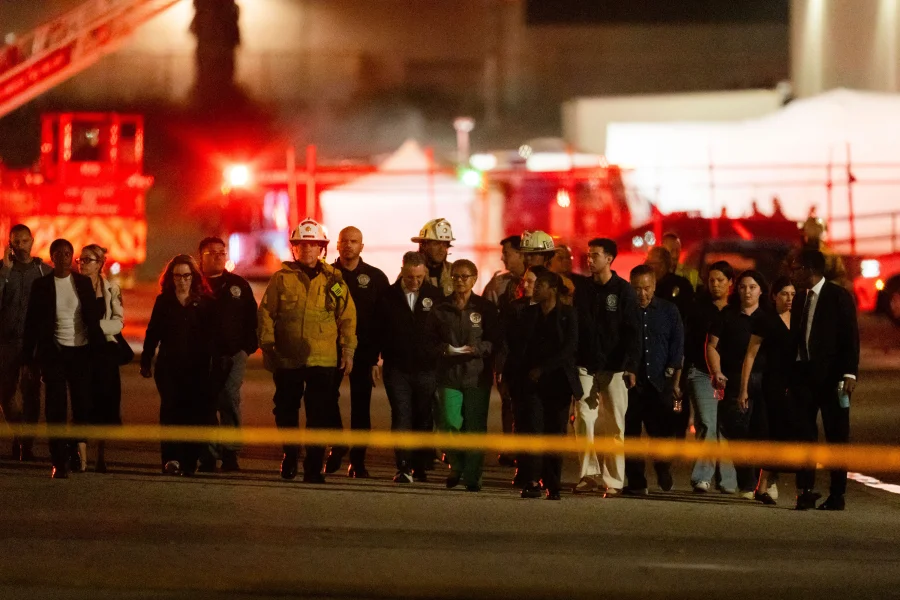 A news helicopter crashed in a Los Angeles neighborhood on Tuesday and burst into flames, killing...
 New York City officials have selected Brooklyn-based company it’s electric to expand the city's curbside electric...
 Police in Jackson, Mississippi, have arrested a man in the death of Tasia Fortune, a 29-year-old...