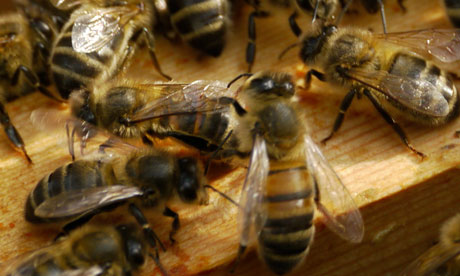
 Widely used pesticides have been found in new research to block a part of the brain that bees use for learning, rendering some of them unable to perform the essential task of associating scents with food. Bees exposed to two kinds of pesticide were slower to learn or completely forgot links between floral scents and nectar.
These effects could make it harder for bees to forage among flowers for food, thereby threatening their survival and reducing the pollination of crops and wild plants. The findings add to existing research that neonicotinoid pesticides are contributing to the decline in bee populations.
It has also been revealed that a separate government field study on the impact of the pesticides on bees was seriously compromised by contamination because the chemicals are so widespread in the environment.
The government put the field study at the heart of the UK's resistance to a Europe-wide ban on the controversial pesticides earlier this month. The UK was one of nine out of 27 member states that opposed suspending some uses of the insecticides across the EU, after environment secretary Owen Paterson said, "I have asked the EC to wait for the results of our field trials, rather than rushing to a decision". On Wednesday, his department said more field research was needed.
TVNL Comment: More research? Nonsense.... more profit for chemical companies. Wake up, world....
 New York City’s top watchdog agency has hired a team of lawyers to investigate exactly what...
 Earth cooked to its hottest month on record in August, blowing far past a key climate...