Scientists have found evidence of a huge underground reservoir containing up to three times as much water as on the entirety of Earth’s surface and theorized to be the source for all of the world’s oceans.
The new evidence, published Friday in the journal Science, suggests that melting rocks, including those containing the water-rich mineral ringwoodite, may exist far deeper below the Earth's surface. The discovery suggests to researchers that most of the Earth’s water slowly seeped out from within, as opposed to arriving on ice-bearing comets, a theory many scientists have posited.
“I think we are finally seeing evidence for a whole-Earth water cycle, which may help explain the vast amount of liquid water on the surface of our habitable planet,” said Northwestern University professor and co-author of the study Steve Jacobsen. “Scientists have been looking for this missing deep water for decades.”
Jacobsen and his fellow researchers studied data from a network of seismometers placed around the U.S. called USArray, as well as lab experiments that simulated what materials like ringwoodite can do at high pressure.
The seismometers measured the speed of waves caused by earthquakes. Scientists could tell when a wave hit a liquid layer because the waves would slow down as they passed through the viscous water.
 In the middle of the 7th century, a plague swept through the walled city of Jerash,...
 A newly discovered species of large dinosaur lived in marshy areas, hunted for fish and had...
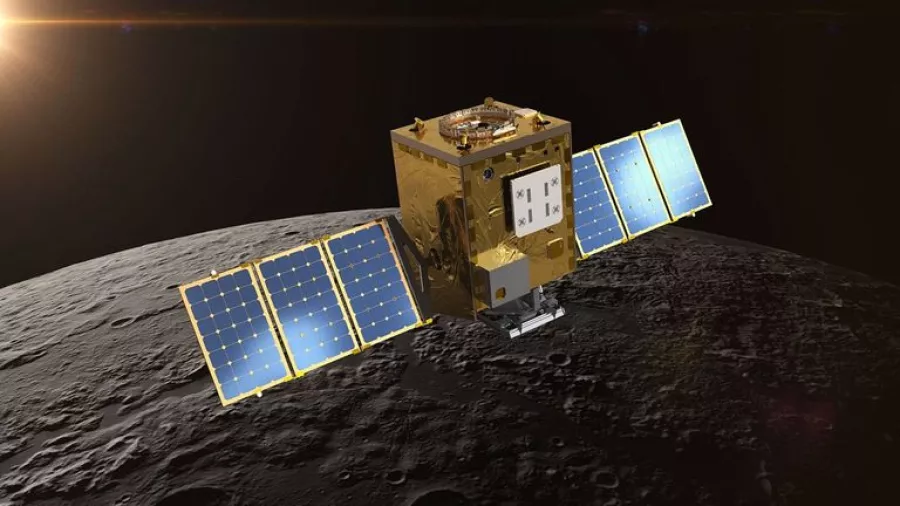 On February 26, 2025, a NASA probe called Lunar Trailblazer lifted off from Kennedy Space Center...
 She navigated segregation to become an esteemed mathematician — and today, her work helps billions of...