


The Ulm 5 Trial Dramatizes Germany’s Complicity with Israel’s Genocide in Gaza
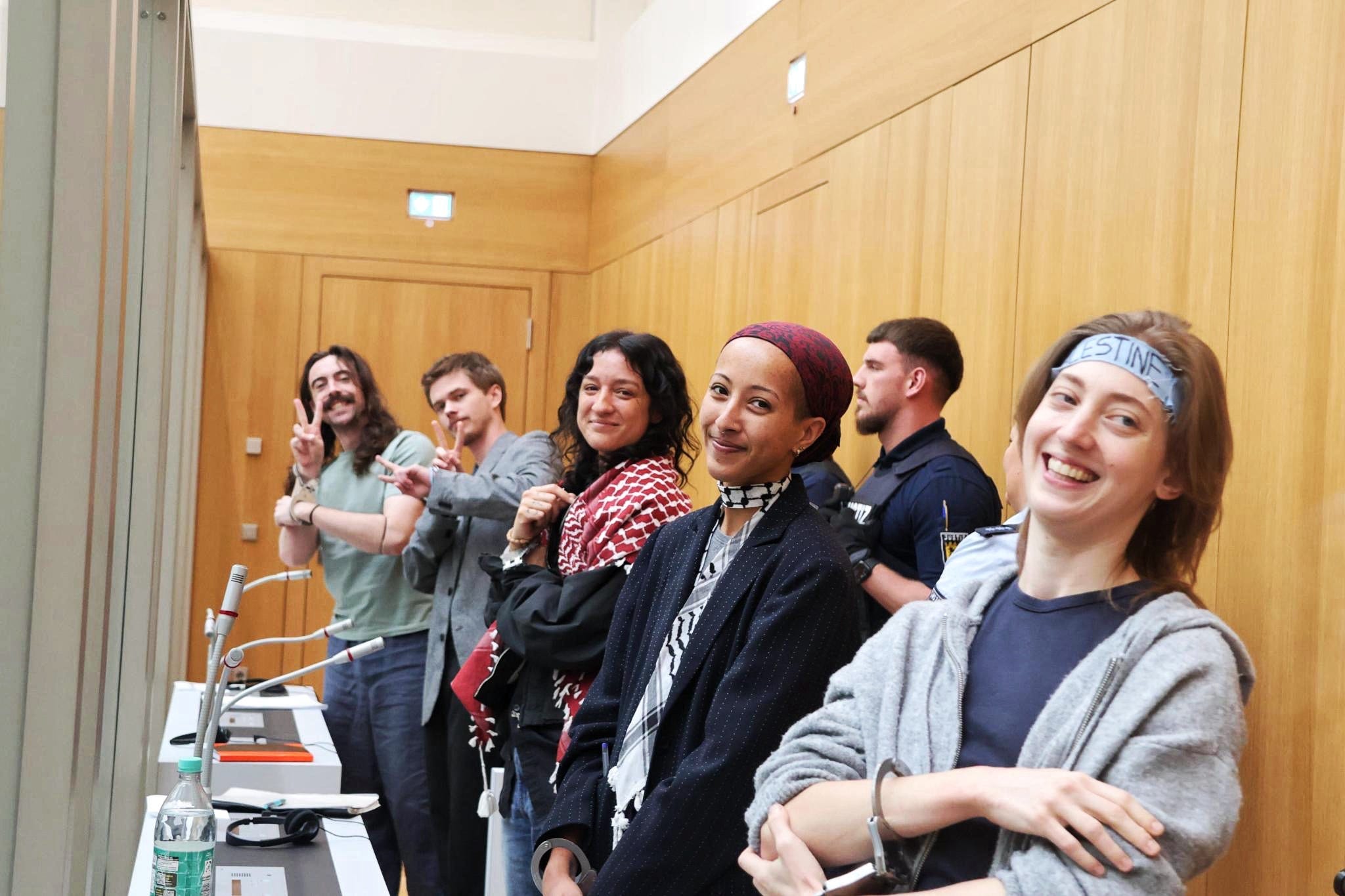 Nearly fifty years after the infamous Red Army Faction trials, Germany’s maximum-security Stammheim Prison is once again the setting of a high-profile case that calls into question the conduct of the German state. This time, however, the defendants are five international pro-Palestinian activists charged with vandalizing a factory in the German city of Ulm owned by Israeli weapons manufacturer Elbit Systems.
On September 8, 2025, the five Berlin-based activists, now known as the Ulm 5, broke into Elbit’s facility and carried out acts of vandalism that they recorded using body cameras and posted online. They destroyed equipment and spray painted “free Palestine” and “baby killers” on the walls. In their videos, the activists—citizens of Britain, Ireland, Spain, and Germany—say they carried out their direct action “to dismantle the tools used to commit genocide in Gaza” and to call attention to Germany’s complicity with it.
No one was injured in the action, which allegedly caused €1.04 million in damages, and the protesters remained at the scene to be arrested. Even so, German prosecutors have clearly decided to treat the Ulm 5 with unusual severity, charging them with membership in a criminal organization, Palestine Action Germany, in addition to trespassing and criminal damage. An additional charge concerns the use of “symbols of an unconstitutional or terrorist organisation”—referring to Hamas—based on the defendants’ use of slogans including “From the river to the sea, Palestine will be free.”
The courtroom itself has been staged for maximum drama, as if the proceedings concerned dangerous criminals rather than nonviolent protesters. The five defendants sit behind a double layer of bulletproof glass that separates them from both their legal team and the public gallery.
Israel seeks US weapons 'compensation' after Saudi F-35 deal
 Israel plans to seek additional US weapons and defence capabilities as "compensation" after Washington approved the potential sale of F-35 fighter jets to Saudi Arabia, Israeli media has reported.
Israeli news website Walla reported on Friday that Israeli officials are expected to ask US President Donald Trump's administration to approve weapons systems that Washington had previously declined to provide.
The reported requests extend beyond advanced fighter aircraft and stealth capabilities to space-based weapons and the development and production of interceptor aircraft, Walla reported.
Israeli officials are also expected to seek "bunker-busting munitions and underground systems capable of operating deep beneath rocky mountains".
Walla said the requests are intended to secure a US "compensation" package following Washington's decision to approve the potential F-35 sale to Riyadh.
NYC's top watchdog launches probe into what mayors knew about post-9/11 air
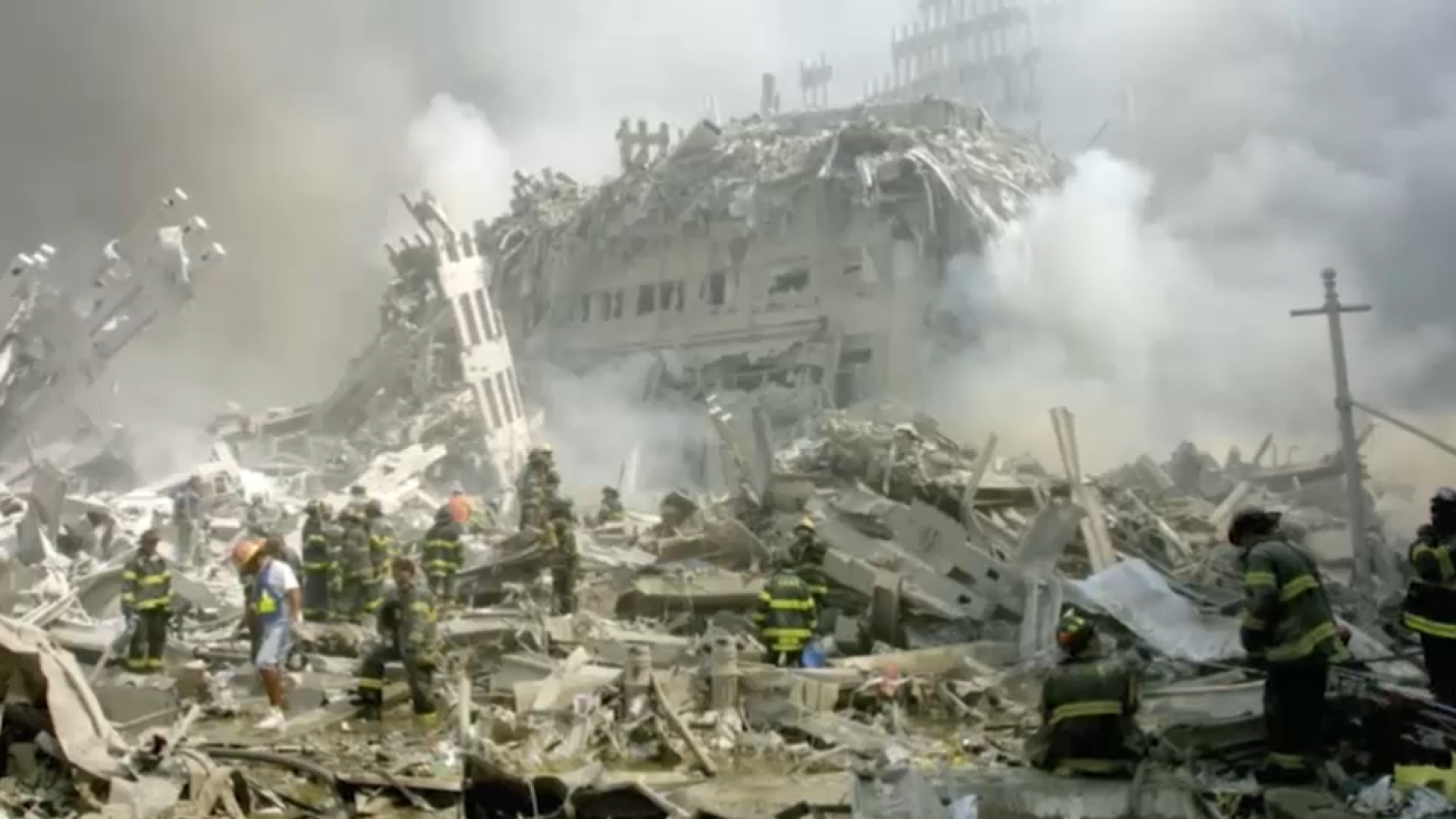 New York City’s top watchdog agency has hired a team of lawyers to investigate exactly what city officials knew about health hazards from toxic dust created by the destruction of the World Trade Center on 9/11.
In a notice issued on Friday, the Department of Investigation said it selected a firm to “ascertain the knowledge possessed by mayoral administrations on environmental toxins produced by the Sept. 11, 2001 terrorist attacks.”
The investigation is mandated by a City Council resolution passed in July 2025. The department’s plan to hire the outside counsel to help with the probe comes just over a week after Mayor Zohran Mamdani released some 170,000 documents related to the air quality around Ground Zero following the attacks that revealed officials had early concerns over asbestos — and legal liability — even as government leaders publicly told New Yorkers the air was safe to breathe.
The investigation department is finalizing a two-year, $3.8 million contract to the law firm Epstein Becker and Green PC to help with what the notice described as a “time-sensitive” probe. The law firm did not respond to a request for comment.
Gavin Newsom signs election security bills to thwart federal interference by Trump
 California governor Gavin Newsom has signed off on a package of bills aimed at bolstering election security, including measures to thwart federal political interference, his office announced on Sunday.
The pieces of legislation appear to address hot button national and state electoral issues, including an extension to the hours for mail-in voting drop off locations.
Newsom singled out the vote-by-mail measure, framing it as a safeguard against the Trump administration’s efforts to restrict the practice it claims is rife with fraud. The US supreme court recently blocked the administration’s proposed changes to vote-by-mail, including an unwieldy mandate for states to submit lists of approved voters for mail ballots to the US postal service.
“Donald Trump won’t stop until he can exert dictatorial control over your free vote and disenfranchise millions of people this November. California will stop him at every opportunity,” he said in a statement. “We have no bigger task than fighting to protect the right to vote from interference and meddling – the future of democracy is on the line.”
Trump doubles down on demand for ‘recognition’ in Kennedy Center fight
President Trump is doubling down on his insistence that he needs “recognition” from the Kennedy Center in return for planned renovations.
Trump’s assertion Friday afternoon seems to mean he is holding fast to his demand that his name should be added to the center in some shape or form — even though a court ruled against him on that score this past week.
“If we’re going to save the Kennedy Center, I think the Trump administration should be given recognition for doing so,” the president told reporters during an Oval Office encounter that was otherwise dominated by his declaration that he would ban three news organizations — CNN, MS NOW and Politico — from the White House.
The furor over the Kennedy Center has consumed much of the week, with developments coming thick and fast.
More Articles...
- Denmark’s leaders are cautiously optimistic about Trump’s announcement of a Greenland deal
- Men deported from US bound and beaten in Equatorial Guinea detention hotel, lawyers say
- It's illegal for armed federal officers to be at polls. Lawsuits seek to ensure that
- Pentagon’s count leaves out some deaths in Middle East during Iran war
Page 1 of 1167