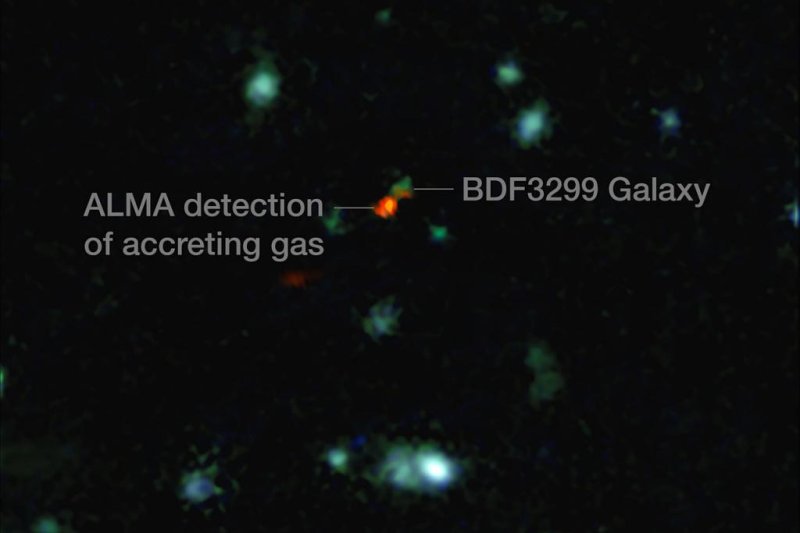
 For the first time, astronomers in Europe have observed star-forming gas clouds in the early universe -- the building blocks of the first galaxies.
The faint glow of ionized carbon was spotted by the European Southern Observatory's ALMA telescope, located in Chile. To find these earliest galaxies, researchers trained the telescope deep into space, past the obvious light of more mature quasars and star-filled galaxies.
While aiming ALMA's instruments at some of the oldest known galaxies -- formed just 800 million years after the Big Bang -- astronomers picked up the signal of glowing carbon just to the side of one of these ancient galaxies, known as BDF 3299.
"This is the most distant detection ever of this kind of emission from a 'normal' galaxy, seen less than one billion years after the Big Bang," Andrea Ferrara, an astronomer with Italy's Scuola Normale Superiore and co-author of a new study on the findings, said in a press release.
 In the middle of the 7th century, a plague swept through the walled city of Jerash,...
 A newly discovered species of large dinosaur lived in marshy areas, hunted for fish and had...
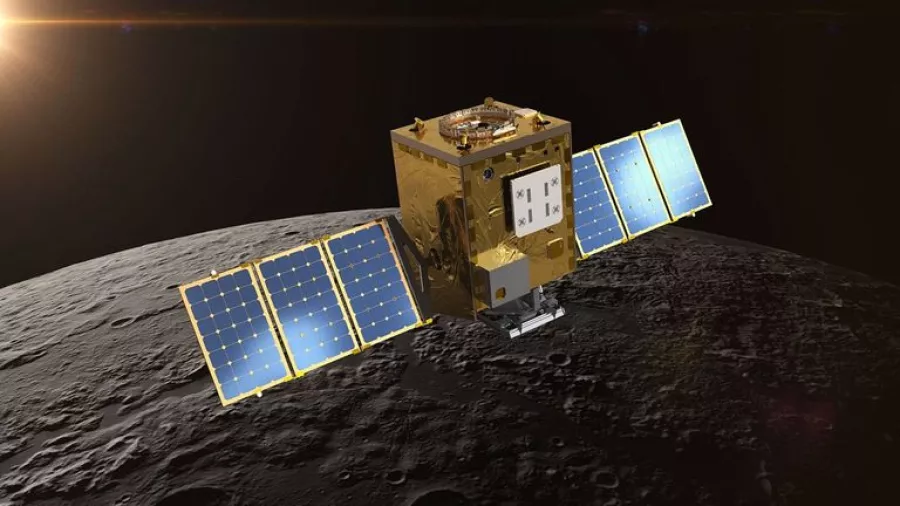 On February 26, 2025, a NASA probe called Lunar Trailblazer lifted off from Kennedy Space Center...
 She navigated segregation to become an esteemed mathematician — and today, her work helps billions of...