Yewazi, an Afghan national, began working as an interpreter with the U.S. military in 2006, when he was 20 years old, accompanying units on patrol in the Nuristan and Kunar provinces, among the most dangerous in the country.
In May 2009, during a mission to repair a collapsed bridge in a remote northeastern valley, the soldiers he was with were ambushed; shrapnel from a rocket-propelled grenade peppered the right side of his body, maiming him so badly that doctors initially told him he’d lose his right hand. As he recovered at Bagram Air Base, his unit returned to the States.
Now, with the surge done and withdrawal planned for 2014, Yewazi has found himself alone in a nation where, he says, many see him as an infidel, a traitor to his people, a “piece of shit” for working with the occupiers.
“If I try to go to my home town (in the Kunar province) I’d be killed,” he wrote in an email, “and beheaded because I have worked for coalition forces and everyone knows that in my area.”
So he’s in Kabul, where it’s easier to be anonymous. The treatment for his injury included four surgeries over a period of a year and a half, and his right hand still hasn’t regained its full functionality. Late last year, he was finally able to work again, and he went back to translating—this time for Czech troops. But he didn’t feel safe, and so he quit six months later.
 Lebanese farmer Saleh* woke up before dawn on 3 September to harvest his fig trees in...
 The acting U.S. Navy secretary Hung Cao said that the Iranian military severely damaged a major...
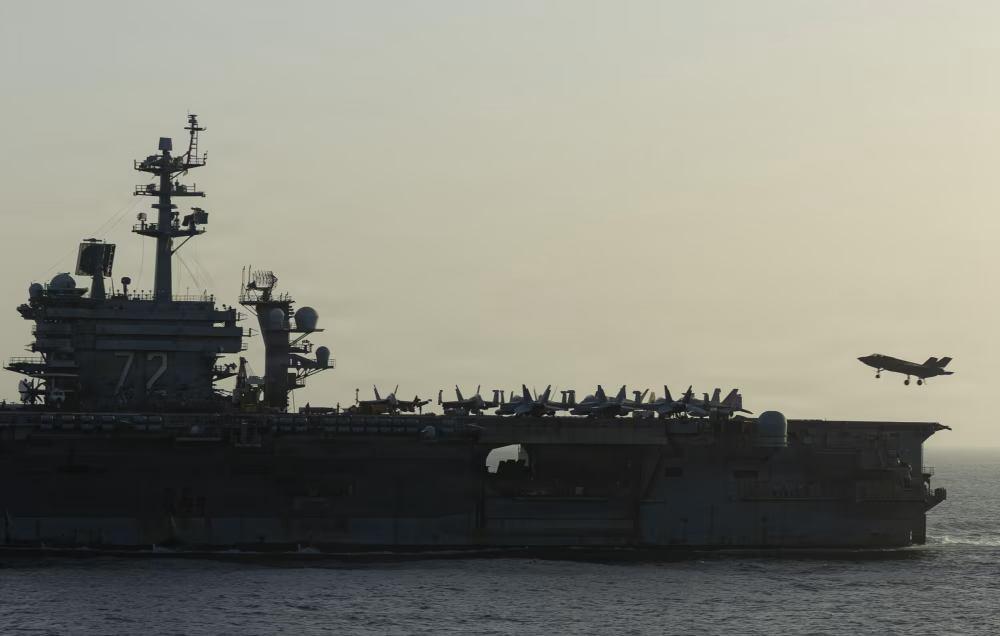 Iran said Sunday it struck an unmanned U.S. vessel trying to enter the Strait of...