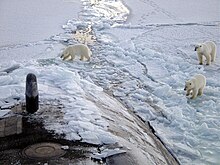
 Like the rest of the 2.5-million-square-foot area at the top of the world, this chunk of the U.S. Arctic is melting quickly because of accelerated climate change. The prospect of newly thawed sea lanes and a freshly accessible, resource-rich seabed has nations jockeying for position. And government and military officials are concerned the United States is not moving quickly enough to protect American interests in this vulnerable and fast-changing region.
"We're not doing OK," said Lt. Cmdr. Nahshon Almandmoss as he flew the massive plane on the nine-hour flight from Kodiak to the northern border then down along the coast through the Bering Strait.
"We definitely don't have the infrastructure available to operate for an extended period of time in the Arctic in the summer, much less in the winter when it's more critical for logistical purposes."
The Obama administration, like the Bush administration before it, has identified the Arctic as an area of key strategic interest. The U.S. military anticipates the Arctic will become "ice-free" for several summer weeks by 2030, possibly as early as 2013.
But the United States does not have the military and civilian resources it says it needs to successfully operate there - and there are few indications that any significant ones will be forthcoming.
 New York City’s top watchdog agency has hired a team of lawyers to investigate exactly what...
 Earth cooked to its hottest month on record in August, blowing far past a key climate...