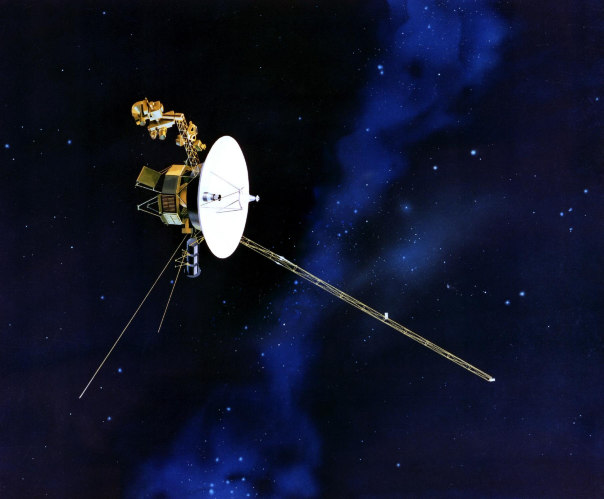
Those of us who can remember popping the Allman Brothers into the 8-track tape deck can identify with Voyagers 1 and 2 - a couple of nearly old fogies. But these NASA stalwarts are set to make space history. Again.
Wednesday marks the 35th anniversary of Voyager 1's launch to Jupiter and Saturn. Voyager 2 marked its 35th anniversary on Aug. 20.
"They were the first fully automated spacecraft that could fly themselves," Ed Stone, chief Voyager project scientist, told the Los Angeles Times in an interview Tuesday. "They were the peak of technology."
Now the Voyagers are on their way to becoming the first human-made objects ever to enter interstellar space - that yawning black gap between the stars.
Since its launch, Voyager 1 has traveled billions of miles - it is now 11 billion miles from the sun. Voyager 2 is not far behind, at 9 billion miles from the sun.
According to NASA, both spacecraft have spent the last five years exploring the outer layer of the heliosphere, "the giant bubble of charged particles the sun blows around itself."