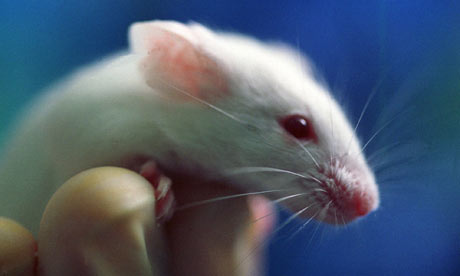
 Scientists claim to be a step closer to reversing the ageing process after rejuvenating worn out organs in elderly mice. The experimental treatment developed by researchers at the Dana-Farber Cancer Institute, Harvard Medical School, turned weak and feeble old mice into healthy animals by regenerating their aged bodies.
The surprise recovery of the animals has raised hopes among scientists that it may be possible to achieve a similar feat in humans – or at least to slow down the ageing process.
An anti-ageing therapy could have a dramatic impact on public health by reducing the burden of age-related health problems, such as dementia, stroke and heart disease, and prolonging the quality of life for an increasingly aged population.
"What we saw in these animals was not a slowing down or stabilisation of the ageing process. We saw a dramatic reversal – and that was unexpected," said Ronald DePinho, who led the study, which was published in the journal Nature.
 Down a short gravel track in a largely nondescript corner of Louisiana sits a gas processing...
 Netia McCray recalls how excited she was to join the federal advisory committee on long COVID...
 A 10,000 year-old tooth in remarkable condition from an ancient Pacific mastodon, a large mammal that...
 The universe is a strange place — filled with exploding stars, ancient galaxies, and unseen worlds....