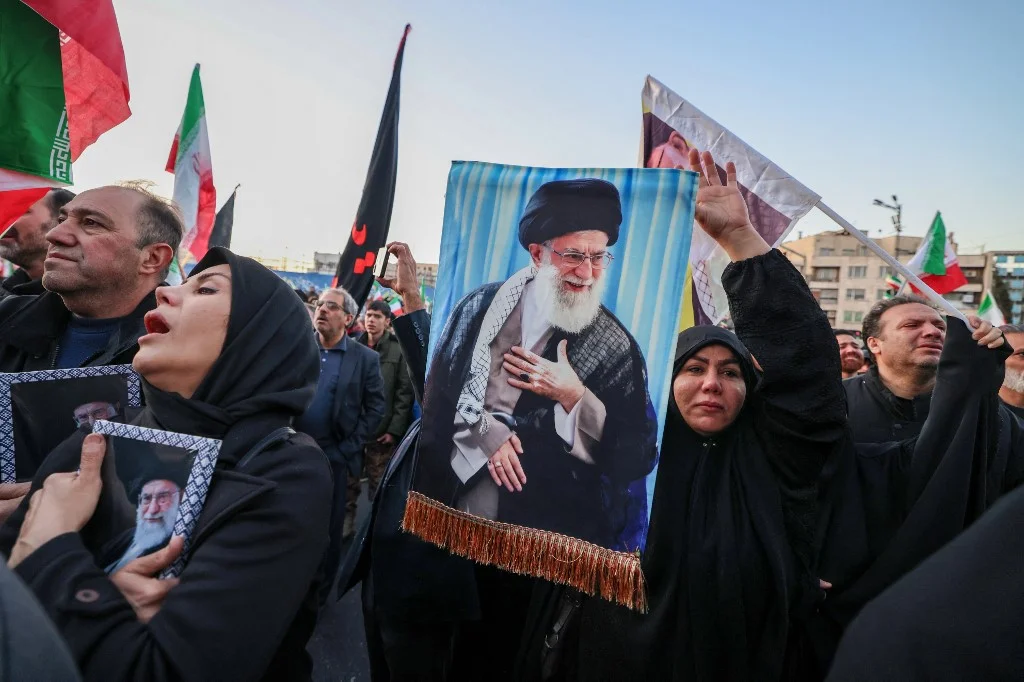
 “On the US calendar it’s still March 4,” Jabbarli said, “but so much happens in a single day that sometimes it would normally take months or years.”
Ramin Jabbarli is a sociologist and the director of the Seattle-based Foundation for Inclusive Society, an NGO that regularly monitors the human rights situation in Iran. He told Kyiv Post that since airstrikes began last Saturday, it has not only been the internet – but even phone lines have been cut off.
“It’s not only about protests,” Jabbarli said. “They don’t want information to spread quickly… They want to limit communications.”
Monitoring group NetBlocks reported Iran’s connectivity falling to around 1% of ordinary levels during the blackout. Jabbarli said some footage escapes via satellite links like Starlink or through devices brought out of the country, but described those routes as limited and risky.
The most urgent political question, Jabbarli said, is what comes after Khamenei – and whether the succession stabilizes the system or becomes another trigger for conflict.
“There are different alternatives being discussed,” he said. “One is Khamenei’s son. Another is [Iran’s first supreme leader Ruhollah] Khomeini’s grandson. Hassan Rouhani is also mentioned.”
 Lebanese farmer Saleh* woke up before dawn on 3 September to harvest his fig trees in...
 The acting U.S. Navy secretary Hung Cao said that the Iranian military severely damaged a major...
 Iran said Sunday it struck an unmanned U.S. vessel trying to enter the Strait of...