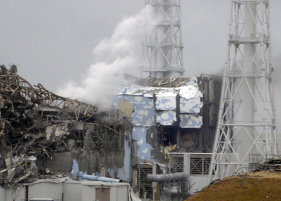
That suggests that radiation from the plant is still being released into the ocean, wrote Ken Buesseler, a marine of the Woods Hole Oceanographic Institution in Woods Hole, Mass., in a perspective article in Friday's edition of the journal Nature.
Buesseler reviewed data on radionuclides in fish and other seafood that have been compiled by the Japanese Ministry of Agriculture, Forestry and Fisheries since March 23, 2011. Cesium levels were highest in bottom-dwelling fish caught near Fukushima prefecture, and lower in fish who live in the open ocean or closer to the surface, Buesseler reported.
He also noted that cesium levels had not declined, except "perhaps" in surface-dwelling fish. Over time, cesium that accumulates in the muscle tissue of fish should decline at a loss rate of a few percent per day. From this Buesseler reasoned that "there must be a continued source of cesium contamination associated with the seafloor." One possibility could be radionuclides from Fukushima lurking in ocean bottom sediments.
 New York City’s top watchdog agency has hired a team of lawyers to investigate exactly what...
 Earth cooked to its hottest month on record in August, blowing far past a key climate...