Science Glance
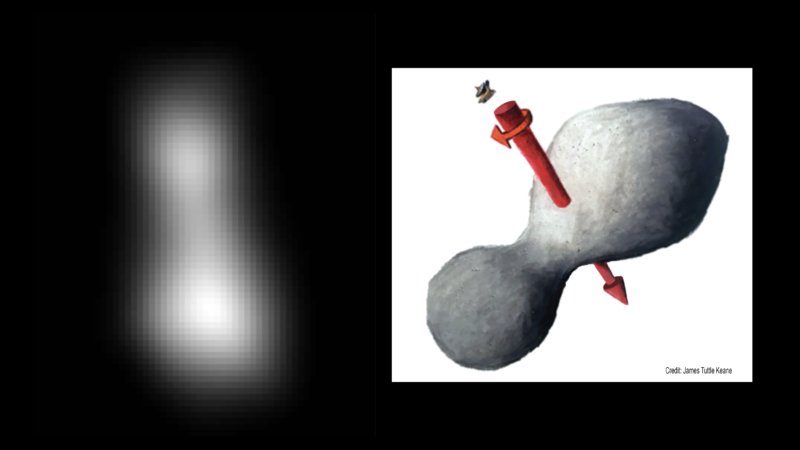
While people around the world were celebrating the arrival of 2019, people at the Johns Hopkins Applied Physics Laboratory in Maryland were hard at work. Billions of miles away, the New Horizons probe was flying past Ultima Thule, a small object in the Kuiper Belt. By Tuesday morning, the hardware had sent back a status report that indicated the flyby went as planned, and New Horizons now has lots of data from Ultima Thule that it will slowly send back to Earth over the coming months.
While we don't yet have any of the data that will tell us details about this relic of the Solar System's formation, images taken during the approach solved one of the mysteries that had arisen as New Horizons closed in. But one of the key questions—is Ultima Thule one object or two?—remains unanswered.
 An American astronaut and Russian cosmonaut were forced to eject from an aborted launch to the International Space Station early Thursday and make an emergency landing.
 Scientists have discovered an atom filled with atoms. The atom's electrons orbit at such a great distance that there's room for other atoms.
 For the first time, researchers have used the cloning method that produced Dolly the sheep to create two healthy monkeys, bringing science an important step closer to being able to do the same with humans.
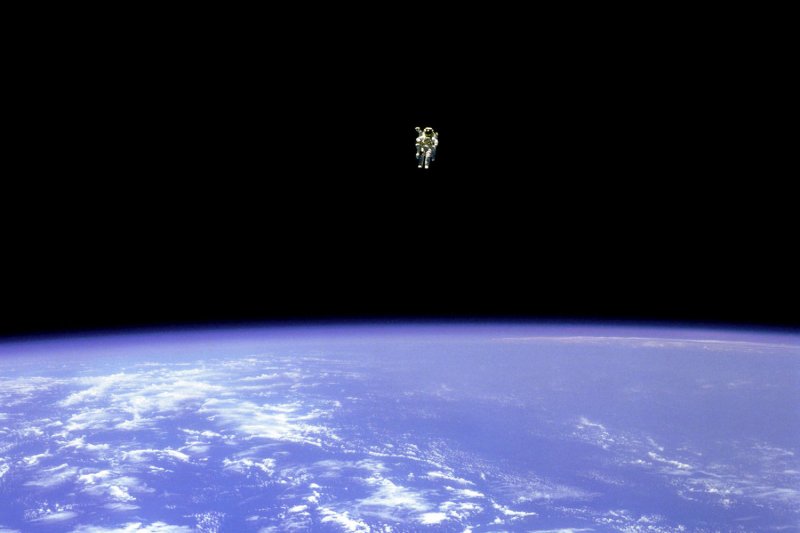 Former NASA astronaut Bruce McCandless, the first person to fly untethered in space, died this week at 80 years old, the agency said Friday.
 NASA's Cassini spacecraft disintegrated in the skies above Saturn on Friday in a final, fateful blaze of cosmic glory, following a remarkable journey of 20 years.