


WHO Will Be Killing You? (WHO) - World Health Organization Facts & Rumors
Deadly blast hits Iraqi party HQ
 A car bomb attack on the headquarters of a Sunni party in Iraq has killed at least four people and wounded at least 23 in the central city of Falluja.
The offices of Vice-President Tareq Hashemi's Islamic party were almost completely destroyed.
U.S. stops giving militant death tolls in Afghanistan
 U.S. military officials in Afghanistan have halted the practice of releasing the number of militants killed in fighting with American-led forces as part of an overall strategy shift that emphasizes concern for the local civilian population's well-being rather than hunting insurgent groups.
The decision has triggered a quiet but fierce debate among military officers comparing the current situation with the U.S. experience in Vietnam, when military officials exaggerated body counts and used them as a measure of success.
Big Tobacco Sets Its Sights on Africa
 It's easy enough to buy a smoke at Isa Yakubu's grocery store on a busy street in Lagos, Nigeria. Never mind if you don't have much money. Most local merchants are happy to break open a pack and sell cigarettes one at a time — single sticks, as they're known — for about 10 Nigerian naira, or 7 cents. "St. Moritz is the most popular brand," says Yakubu. "But [people] also like Rothmans and Benson & Hedges."
Agent Orange linked to heart disease, Parkinson's
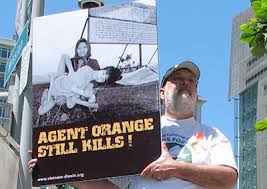 Agent Orange, used by U.S. forces to strip Vietnamese and Cambodian jungles during the Vietnam War, may raise the risk of heart disease and Parkinson's disease, U.S. health advisers said on Friday.
More...
TVNL Comment: Google images "Agent Orange Vietnam." The full truth will never be out.
Suicide bombers hit Afghan city
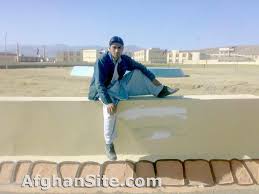 Taliban militants, including several suicide bombers, have attacked government buildings in the south-eastern Afghan city of Khost.
The militants, armed with automatic weapons, battled security forces until six blew themselves up and one was shot dead, according to defence officials.
U.S. admits it has no case against teen held at Guantanamo
In a hearing last week, U.S. District Judge Ellen Segal Huvelle ruled that Mohammed Jawad's confession to Afghan officials was inadmissible because it had been extracted through torture. She also questioned whether the Justice Department had any evidence to proceed with a trial to determine whether he can be held as an enemy combatant.
Huvelle called the case an "outrage" and told Justice Department lawyers that their case against Jawad had been "gutted."
"They're simply trying to manufacture new ways to prolong his detention," he said.
The Justice Department's case against Jawad, whom Afghan officials say was captured when he was just 12 years old, underscores the difficulties the U.S. government faces in justifying its continued imprisonment of Guantanamo detainees.
Breaking The Silence - Testimonies Of Israeli Soldiers
"Breaking the Silence is an organization of veteran Israeli soldiers that collects anonymous testimonies of soldiers who served in the Occupied Territories during the Second Intifada." They recount experiences that deeply affected them, including abusing Palestinians, looting, destroying property, and other practices "excused as military necessities, or explained as extreme and unique cases."
They explained wanton destruction, crops uprooted, human slaughter, women and children killed in cold blood, illegal weapons used, free-fire orders to shoot to kill anywhere at anything that moved, and using civilians as human shields.
52 percent of U.S. soldiers wounded in Iraq, Afghanistan diagnosed with TBI
Some 52 percent of soldiers severely injured in Iraq and Afghanistan who have come to the U.S. Army's largest hospital for treatment have been diagnosed with traumatic brain injuries (TBI), an internal study has found.
The Department of Defense estimated in March this year that the final tally of TBI cases would reach 10 to 20 percent of all personnel deployed to Iraqi and Afghani battlefields.
Page 922 of 1167