Environmental News Archive




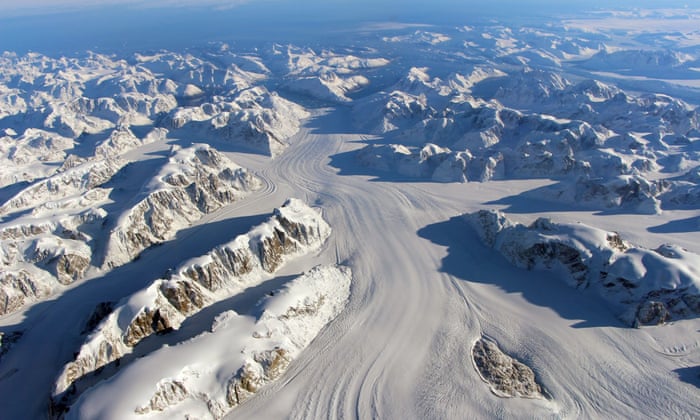 The impact of climate change may appear to be overwhelmingly negative but there is a bright spot for those who struggle to find enough time in the day: melting glaciers are causing the rotation of the Earth to slow thereby lengthening our days, new research has found.
Harvard University researchers have provided an answer to a long-held conundrum over how shrinking glaciers are affecting the rotation and axis of the Earth, calculating that the duration of a day has lengthened by a millisecond over the past 100 years.
Climate change means days are getting longer, scientists find
Advocacy groups not satisfied with climate negotiations thus far
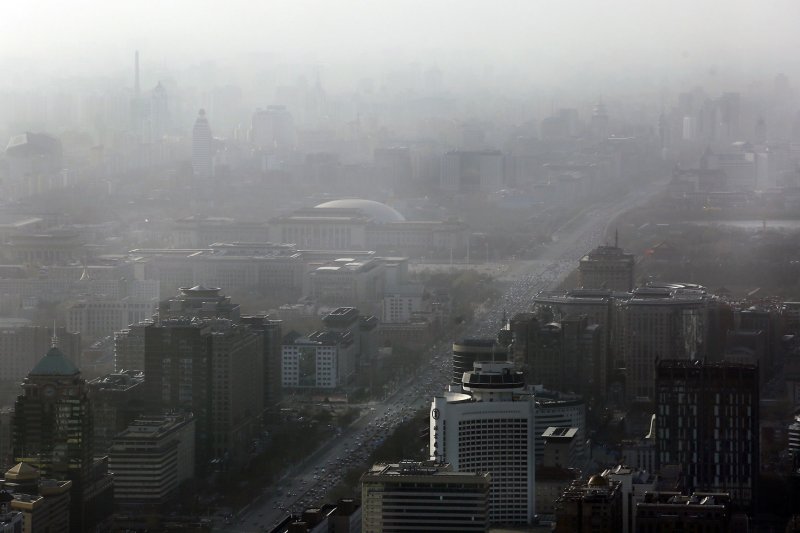 A draft climate agreement unveiled from U.N.-backed talks in Paris kicks many of the critical issues down the road, environmental activists said.
A 27-page draft text, as it stands, lays out an agenda to keep warming trends below a threshold considered acceptable to island and coastal nations. The draft does little, however, to address secondary concerns like migration.
Greenland's glaciers retreating at record speeds
 Greenland's glaciers are on retreat, shrinking at strikingly fast rates -- at least twice as fast as any time over the last 9,500 years.
Researchers with Columbia University's Earth Institute compared modern satellite data with records of glacier growth and decline gleaned from ice cores. Their findings were published last week in the journal Climate of the Past.
"If we compare the rate that these glaciers have retreated in the last hundred years to the rate that they retreated when they disappeared between 8,000 and 7,000 years ago, we see the rate of retreat in the last 100 years was about twice what it was under this naturally forced disappearance," study co-author William D'Andrea, a paleoclimatologist at Columbia's Lamont-Doherty Earth Observatory, explained in a press release.
NYers fear gas pipeline near nuclear reactor could spell disaster
 .The school is just 400 feet from the path of a massive new pipeline expansion project that’s being carried out by Spectra Energy, an oil and gas infrastructure company based in Houston. The Algonquin pipeline expansion is one of at least 22 pipeline projects designed in recent years to transport natural gas from shale fields across the U.S. to distribution points in the Northeast.
But the noise isn’t the only thing troubling local residents like Williams. The pipeline will run within several dozen feet of electrical infrastructure necessary to operate Indian Point, an aging nuclear plant on the Hudson River. Residents worry that if the pipeline were to rupture, it could trigger a chain of events that might end in a nuclear meltdown, devastating their communities and turning New York City into a radioactive evacuation zone.
Researchers: Greenland is melting away
Greenland ice sheet. Brandon Overstreet, a doctoral candidate in hydrology at the University of Wyoming, picked his way across the frozen landscape, clipped his climbing harness to an anchor in the ice and crept towards the edge of a river that rushed downstream towards an enormous sinkhole.
If he fell in, “the death rate is 100 per cent,” said Overstreet’s friend and fellow researcher, Lincoln Pitcher.
But Overstreet’s task, to collect critical data from the river, is essential to understanding one of the most consequential impacts of global warming. The scientific data he and a team of six other researchers collect here could yield groundbreaking information on the rate at which the melting of Greenland ice sheet, one of the biggest and fastest-melting chunks of ice on Earth, will drive up sea levels in the coming decades. The full melting of Greenland’s ice sheet could increase sea levels by about 20 feet.
Unearthing America's Deep Network of Climate Change Deniers
The American public has turned away from outright denial of climate change. Sixty-three percent of adults describe the problem as "serious" in the latest opinion poll from the Washington Post and ABC News, a dip from the 69 percent who held that view in June. The minority who remain skeptical of climate science—a group that includes presidential hopefuls and powerful lawmakers—can count on a dedicated network of several thousand professional supporters.
New research for the first time has put a precise count on the people and groups working to dispute the scientific consensus on climate change. A loose network of 4,556 individuals with overlapping ties to 164 organizations do the most to dispute climate change in the U.S., according to a paper published today in Nature Climate Change. ExxonMobil and the family foundations controlled by Charles and David Koch emerge as the most significant sources of funding for these skeptics. As a two-week United Nations climate summit begins today in Paris, it's striking to notice that a similarly vast infrastructure of denial isn't found in any other nation.
U.S. hardest-hit nation for weather-related disasters
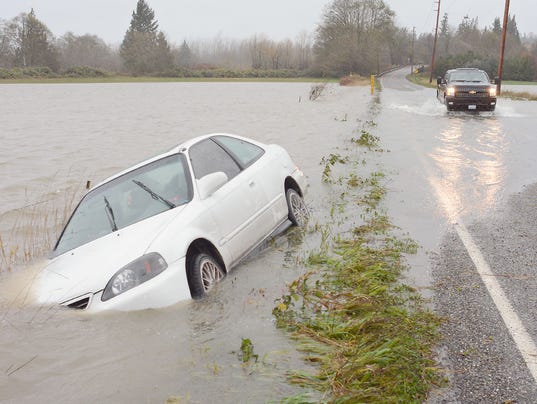 If there has ever been a finding that exemplifies the need for additional investments in weather resiliency and adaptation measures, the United Nations put it forth this week.
Over the past 20 years, 90% of major disasters have been caused by weather, and the United States was the hardest-hit country, according to a new U.N. report.
Fracking Companies Have Been Getting Worse About Disclosing The Chemicals They Use
 Want to know what chemicals energy companies use in their hydraulic fracking operations? Turns out it’s getting harder and harder to answer that question.
According to a new study published in the journal Energy Policy, fracking companies have become less forthcoming since 2013 about the chemicals used in their operations, citing “the use of proprietary compounds” as grounds for limiting their disclosure.
First EPA chief accuses Republicans of ignoring science for political gain
 The man considered the father figure of environmental protection in the US has attacked Republicans for “going through all the stages of denial” over climate change, accusing leading presidential contenders Donald Trump and Marco Rubio of ignoring science for political gain.
William Ruckelshaus, who on Tuesday is to receive the nation’s highest civilian honor, the presidential medal of freedom, told the Guardian that leading Republicans are harming the US’s reputation by attempting to stymie efforts to tackle climate change.
More Articles...
Page 19 of 158