Environmental News Archive


 If you’re a germophobe, you won’t find comfort even in bleak Siberian expanses. Scientists have made another massive discovery of ancient (and giant) viruses hidden dormant in the permafrost. As the planet warms, finding these things—and waking them—is going to become more commonplace.
That’s significant, especially when you understand the gravity of the findings for experts involved in the ongoing research.
Giant Viruses Are Hiding in Permafrost, But Not for Long
Drinking water systems imperiled by failing infrastructure
 Deep inside a 70-year-old water-treatment plant, drinking water for Iowa's capital city is cleansed of harmful nitrates that come from the state's famously rich farmland.
Without Des Moines Water Works, the central Iowa region of 500,000 people that it serves wouldn't have a thriving economy. But after decades of ceaseless service, the utility is confronting an array of problems: Water mains are cracking open hundreds of times every year. Rivers that provide its source water are increasingly polluted. And the city doesn't know how it will afford a $150 million treatment plant at a time when revenues are down and maintenance costs are up.
The pope at White House: Climate change action can't wait
 Jumping into the issues of the day, Pope Francis opened his visit to the United States with a strong call Wednesday for action to combat climate change, calling it a problem that "can no longer be left to a future generation." President Barack Obama, in turn, hailed the pontiff as a moral force who is "shaking us out of our complacency" with reminders to care for the poor and the planet.
The White House mustered all the pageantry it had to offer as the pope arrived at the White House before an adoring crowd of thousands and a nation that seemingly cannot get enough of the humble pontiff who is rejuvenating American Catholicism while giving heartburn to some of its conservatives.
In clash with pope's climate call, U.S. Church leases drilling rights
Casting the fight against climate change as an urgent moral duty, Pope Francis in June urged the world to phase out highly-polluting fossil fuels.
Yet in the heart of U.S. oil country several dioceses and other Catholic institutions are leasing out drilling rights to oil and gas companies to bolster their finances, Reuters has found.
And in one archdiocese -- Oklahoma City -- Church officials have signed three new oil and gas leases since Francis's missive on the environment, leasing documents show.
Explosive wildfire threatens California mountain towns as blaze intensifies
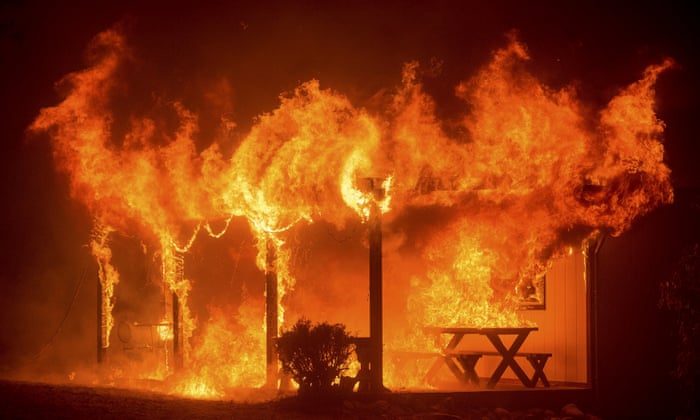 A mountain town is standing by to evacuate on Saturday and residents across a huge swath of northern California have been warned of “explosive fire conditions” as a fierce wildfire across more than 100 square miles suddenly intensified.
California governor Jerry Brown has declared a state of emergency for the counties experiencing the inferno, as it approaches the town of San Andreas, about 60 miles south-east of Sacramento in the Sierra Nevada region.
Drilling boom means more harmful waste spills
 An Associated Press analysis of data from leading oil- and gas-producing states found more than 180 million gallons of wastewater spilled from 2009 to 2014 in incidents involving ruptured pipes, overflowing storage tanks and other mishaps or even deliberate dumping. There were some 21,651 individual spills. And these numbers are incomplete because many releases go unreported.
Though oil spills tend to get more attention, wastewater spills can be more damaging. And in seven of the 11 states the AP examined, the amount of wastewater released was at least twice that of oil discharged.
Alberta lets Nexen reopen some Long Lake pipelines
 Alberta's energy regulator will allow Nexen Energy, the Canadian subsidiary of China's CNOOC Ltd, to reopen some pipelines ordered closed following a major spill.
The Alberta Energy Regulator said late on Sunday that it would allow a restart of 40 of 95 pipelines closed at Nexen's Long Lake oil sands operations after reviewing maintenance and monitoring documentation.
EPA Urged by Nearly 100,000 in the US to Redo Highly Controversial Fracking Study
 The public comment period for the highly controversial US Environmental Protection Agency’s (EPA) fracking study ends today. Food & Water Watch, Environmental Action, Breast Cancer Action and other advocacy groups delivered nearly 100,000 comments from Americans asking the US EPA to redo their study with a higher level of scrutiny and oversight.
The study produced significant controversy due to the discrepancy in what the EPA found in its report and what the agency’s news release title said. The study stated that “we did not find evidence” of “widespread, systemic impacts to drinking water resources,” but the title of the EPA’s news release said, “Assessment shows hydraulic fracturing activities have not led to widespread, systemic impacts to drinking water resources”—a subtle but significant difference that led to most news coverage having headlines like this one in Forbes, “EPA Fracking Study: Drilling Wins.”
Big Bank Says It’s Going To Cost A Lot To Do Nothing On Global Warming
 A new report from Citibank found that acting on climate change by investing in low-carbon energy would save the world $1.8 trillion through 2040, as compared to a business-as-usual scenario. In addition, not acting will cost an additional $44 trillion by 2060 from the “negative effects” of climate change.
The report, titled Energy Darwinism, looked at the predicted cost of energy over the coming decades, the costs of developing low carbon energy sources, and the implications of global energy choices.
More Articles...
Page 22 of 159