



Called "Stop the Frack Attack," this national day of action promises to "bring thousands to the nation's capitol to demand greater government responsibility and corporate accountability for harm that existing oil and gas development causes."
Wednesday, Sep 30th
Last update09:29:55 PM GMT
 Environmental News Archive

Called "Stop the Frack Attack," this national day of action promises to "bring thousands to the nation's capitol to demand greater government responsibility and corporate accountability for harm that existing oil and gas development causes."
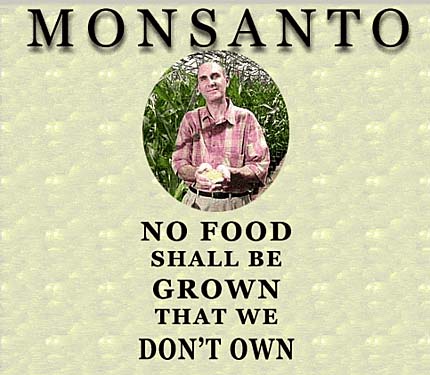
Five million Brazilian farmers are locked in a lawsuit with US-based biotech giant Monsanto, suing for as much as 6.2 billion euros. They say that the genetic-engineering company has been collecting royalties on crops it unfairly claims as its own.
The farmers claim that Monsanto unfairly collects exorbitant profits every year worldwide on royalties from “renewal” seed harvests. “Renewal” crops are those that have been planted using seed from the previous year’s harvest. While the practice of renewal farming is an ancient one, Monsanto disagrees, demanding royalties from any crop generation produced from its genetically-engineered seed. Because the engineered seed is patented, Monsanto not only charges an initial royalty on the sale of the crop produced, but a continuing 2 per cent royalty on every subsequent crop, even if the farmer is using a later generation of seed.

Monitoring stations across the Arctic this spring are measuring more than 400 parts per million of the heat-trapping gas in the atmosphere. The number isn’t quite a surprise, because it’s been rising at an accelerating pace. Years ago, it passed the 350 ppm mark that many scientists say is the highest safe level for carbon dioxide. It now stands globally at 395.
 When fallout from the Fukushima nuclear disaster began appearing last Spring in U.S. air, rainwater, drinking water, and milk, many U.S. media outlets ignored the story.
It was a difficult story to cover. The U.S. Environmental Protection Agency was releasing raw data erratically, sometimes late on Friday afternoons, and reporters either had to possess radiation expertise or take a crash course in picocuries, millisieverts, MCLs and DILs.
 "We first discovered the unintended presence of the Roundup Ready gene in our conventional alfalfa seed in 2005," says the letter. "It was identified in one of our foundation seed production lots grown in California. We tested the foundation seed lot prior to shipping it to a producer who intended to plant it for organic seed production.
The letter goes on to explain that several other foundation seed lot samples in both California and Washington State also tested positive for the GM alfalfa trait CP4EPSPS. And because at least one of those tested samples was from seeds produced in 2003, it is clear that Monsanto's GM alfalfa had been planted and spreading its toxic traits long before the USDA gave it the green light to do so.
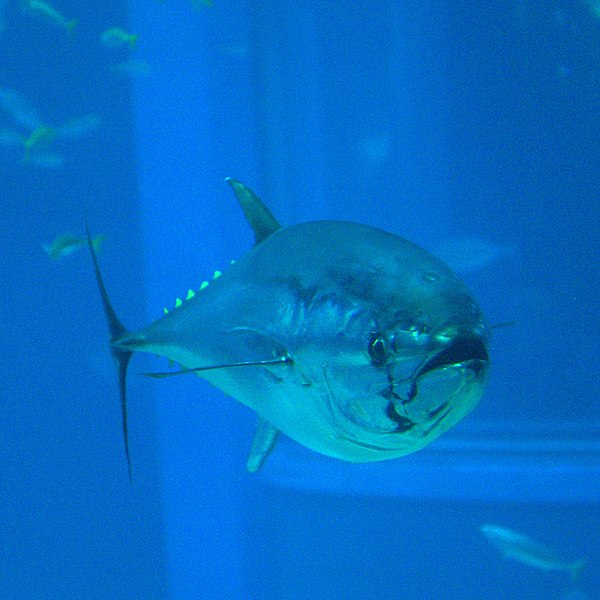 Pacific bluefin tuna migrating last year from coastal Japan to the waters off Southern California contained radioactive cesium isotopes from the Fukushima nuclear disaster, scientists reported Monday.
“The tuna packaged it up and brought it across the world’s largest ocean,” said marine ecologist Daniel Madigan at Stanford University, who led the study team. “We were definitely surprised to see it at all and even more surprised to see it in every one we measured.”

"We were frankly kind of startled," said Nicholas Fisher, one of the researchers reporting the findings online Monday in the Proceedings of the National Academy of Sciences.
 Florida's top state wetlands expert has been suspended after she refused to issue a permit on a controversial project — one that she said her boss was willing to bend the rules to approve.
The project: turning a North Florida pine plantation into a business that attempts to make up for wetlands that are wiped out by new roads and development. At stake: millions of dollars in wetland "credits" that can be sold to government and developers.
 Fourteen months after the accident, a pool brimming with used fuel rods and filled with vast quantities of radioactive cesium still sits on the top floor of a heavily damaged reactor building, covered only with plastic.
The public’s fears about the pool have grown in recent months as some scientists have warned that it has the most potential for setting off a new catastrophe, now that the three nuclear reactors that suffered meltdowns are in a more stable state, and as frequent quakes continue to rattle the region.
Page 84 of 159