Environmental News Archive



 After Scott Ely and his father talked with salesmen from an energy company about signing the lease allowing gas drilling on their land in northeastern Pennsylvania, he said he felt certain it required the company to leave the property as good as new.
So Mr. Ely said he was surprised several years later when the drilling company, Cabot Oil and Gas, informed them that rather than draining and hauling away the toxic drilling sludge stored in large waste ponds on the property, it would leave the waste, cover it with dirt and seed the area with grass. He knew that waste pond liners can leak, seeping contaminated waste.
 The City of Binghamton is looking to help a group of residents in Dimock who say they've run out of clean water.
 "New Yorkers shouldn't become unwilling data points in a mass health experiment, " says Sandra Steingraber, the ecologist-biologist author of Raising Elijah and Living Downstream. "I want to be able to tell the 3,300 people diagnosed with cancer today, and the 3,300 people diagnosed tomorrow, and the next day, and the next, that we're not sending toxic chemicals that interfere with hormonal and cellular functioning into the water aquifers."
 One of my favorite films about aliens invading the earth is John Carpenter’s They Live. The aliens strip the earth of its resources and accelerate global climate change to change earth’s environment to that of their home planet. Some humans collaborate with the aliens and are rewarded for their betrayal with money and positions of power.
 Democratic Governor Andrew Cuomo recently responded to the contentious hydrofracking issue by acknowledging that "the temperature is high. We have a process. Let's get the facts.
 On a bright fall day in 2008, Scott Ely arrived at the natural gas well a few hundred feet from his home to find work strangely stilled.
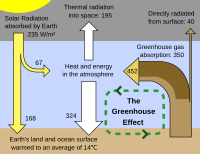 Global warming gases have increased beyond the worst predictions of the UN's climate experts - exceeding the worst of seven emissions predictions laid down by the UN's World Meteorological Organisations.