Journalism Glance
 In most of its coverage BBC depended on Israeli sources whilst the Palestinian side has been ignored. PRC suggests that such coverage harm the image of BBC and could classify it as an alternative for some Israeli media outlets. PRC and part of its day-to-day monitoring for BBC observed the following:
Direct Bias Shown on BBC on Flotilla Crime
Lexicon of most misleading terms in Israeli-Palestinian conflict
 The Israeli media is rife with false terms and statements that distort the public's perception of reality.
"Humanitarian crisis." "There is no humanitarian crisis in Gaza," say official Israeli spokesmen such as Defense Minister Ehud Barak and Foreign Ministry director general Yossi Gal say repeatedly. And they are correct, because a "crisis" is a sudden change, a deviation from a norm, while what's going on in Gaza has become the routine.
Journalism and 'the words of power'
 Power and the media are not just about cosy relationships between journalists and political leaders, between editors and presidents. They are not just about the parasitic-osmotic relationship between supposedly honourable reporters and the nexus of power that runs between White House and state department and Pentagon, between Downing Street and the foreign office and the ministry of defence. In the western context, power and the media is about words - and the use of words.
It is about semantics.It is about the employment of phrases and clauses and their origins. And it is about the misuse of history; and about our ignorance of history. More and more today, we journalists have become prisoners of the language of power.
Report: Alcohol companies go online to lure young drinkers
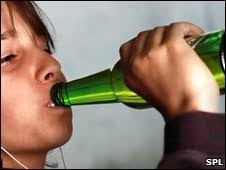 Alcohol companies are increasingly using the latest new media technologies — including cellphones, social networking sites, YouTube and other features of the expanding digital universe — to reach young drinkers, a new report contends.
And existing regulations may not be keeping up with the marketing trend, the report's authors added.
National Broadcaster Openly Rejects Question On Trilateral Meeting
 In a blatant example of mainstream media censorship, by the national broadcaster in Ireland RTE, who have an obligation to inform the public and to give a fair and balanced viewpoint, Monday nights airing of The Frontline on RTE 1, hosted by Pat Kenny, we witnessed the type of censorship one would expect from a Third World dictatorship. Up to the point where the lady in the audience mentions the Bilderberg Group and Trilateral Commission meeting in Dublin last week, Kenny remains silent but immediately steps in to talk over the questioner.
3 FBI probes looked at '80s leaks to columnist Robert Novak
 The FBI launched three separate investigations into the leaking of classified material made public by newspaper columnist Robert Novak in the 1980s, newly obtained records show.
Previously secret FBI files reveal that the bureau pursued Novak's sources after reading columns Novak and his writing partner, Rowland Evans, published in The Washington Post in 1983 and 1987. Agents also tried to identify the source of classified information that Novak divulged in 1983 on the television show "The McLaughlin Group."
Chevron's "Crude" Attempt to Suppress Free Speech: Bill Moyers and Michael Winship
 Even as headlines and broadcast news are dominated by BP's fire-ravaged, sunken offshore rig and the ruptured well gushing a reported 210,000 gallons of oil per day into the Gulf of Mexico, there's another important story involving Big Oil and pollution -- one that shatters not only the environment but the essential First Amendment right of journalists to tell truth and shame the devil.
More Articles...
Page 62 of 103