Science Glance
 “Evidence .... Show me evidence of CURRENT ‘intelligent life on Mars.’ :) All we see are ruins ... literally thousands of square miles ... of ruins. And, a lot of mud covering them ... slowly eroding and blowing away in the wind. Which is why we can now see glimpses [of] what was once buried in a vast, planetary catastrophe--Which suddenly ENDED the Martian Civilization ... a long, long time ago. RCH - P.S. If there is anyone NOW living on Mars, it is ‘us’ -- as part of the ~60-year-old Secret Space Program."
New data, law of evidence support view of Mars having indigenous, intelligent extraterrestrial life
Indonesian 'hobbit' challenges evolutionary theory
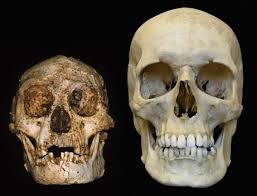 Her scientific name is Homo floresiensis, her nickname is "the hobbit," and the hunt is on to prove that she and the dozen other hobbits since discovered are not a quirk of nature but members of a distinct hominid species.
The discovery of Homo floresiensis shocked and divided scientists. Here apparently was a band of distant relatives that exhibited features not seen for millions of years but were living at the same time as much more modern humans. Almost overnight, the find threatened to change our understanding of human evolution.
It would mean contemplating the possibility that not all the answers to human evolution lie in Africa, and that our development was more complex than previously thought.
Darwin Foes Add Warming to Targets
 Critics of the teaching of evolution in the nation’s classrooms are gaining ground in some states by linking the issue to global warming, arguing that dissenting views on both scientific subjects should be taught in public schools.
In Kentucky, a bill recently introduced in the Legislature would encourage teachers to discuss “the advantages and disadvantages of scientific theories,” including “evolution, the origins of life, global warming and human cloning.”
The bill, which has yet to be voted on, is patterned on even more aggressive efforts in other states to fuse such issues. In Louisiana, a law passed in 2008 says the state board of education may assist teachers in promoting “critical thinking” on all of those subjects.
Northwest at risk of megaquake like one in Chile
 Just 50 miles off the Pacific Northwest coast is an earthquake hotspot that threatens to unleash on Seattle, Portland and Vancouver the kind of damage that has shattered Chile.
The fault has been dormant for more than 300 years, but when it awakens — tomorrow or decades from now — the consequences could be devastating. Recent computer simulations of a hypothetical magnitude-9 quake found that shaking could last 2 to 5 minutes — strong enough to potentially cause poorly constructed buildings from British Columbia to Northern California to collapse and severely damage highways and bridges.
Chilean Quake Likely Shifted Earth’s Axis, NASA Scientist Says
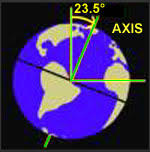 The earthquake that killed more than 700 people in Chile on Feb. 27 probably shifted the Earth’s axis and shortened the day, a National Aeronautics and Space Administration scientist said.
Earthquakes can involve shifting hundreds of kilometers of rock by several meters, changing the distribution of mass on the planet. This affects the Earth’s rotation, said Richard Gross, a geophysicist at NASA’s Jet Propulsion Laboratory in Pasadena, California, who uses a computer model to calculate the effects.
“The length of the day should have gotten shorter by 1.26 microseconds (millionths of a second),” Gross, said today in an e-mailed reply to questions. “The axis about which the Earth’s mass is balanced should have moved by 2.7 milliarcseconds (about 8 centimeters or 3 inches).”
Milky Way galaxy littered with 'alien' stars
 Dwarf galaxies gobbled up by our own Milky Way make up about a quarter of the 160 star-packed "globular clusters" littering the galaxy, astronomers report Tuesday.
In the Monthly Notioves of the Royal Astronomical Society report, which was led by Duncan Forbes of the United Kingdom's University of Swinburne, a team looked at chemical signatures of 93 globular clusters. The clusters are balls containing hundreds to millions of stars littered throughout the galaxy.
More...
Space rock contains organic molecular feast
 Scientists say they have confirmed that a meteorite that crashed into earth 40 years ago contains millions of different organic compounds. It is thought the Murchison meteorite could be even older than the Sun.
"Having this information means you can tell what was happening during the birth of the Solar System," said lead researcher Dr Philippe Schmitt-Kopplin.
More Articles...
Page 53 of 62