War Glance
 Lies aren't used just to start wars, but also to escalate them, continue them, and even reduce or end them. And we got a pile of war lies from the president Tuesday evening.
Obama claimed the war on Iraq was initially a war to disarm a state. Really? And then "terrorist" Iraqis attacked our troops in their country. Yet if they had done that in our country, I suspect they would still be the terrorists. And then it became a civil war which we were innocently caught up in. Uh huh.
More War Lies
20,000 Iraq war victims unidentified at morgue
 On the charts that the American military provides, those numbers are seen as success, from nearly 4,000 dead in one month in 2006 to the few hundred today. The Interior Ministry offers its own toll of war — 72,124 since 2003, a number too precise to be true. At the morgue, more than 20,000 of the dead, which even sober estimates suggest total 100,000 or more, are still unidentified.
For Iraqis, Victims of War Are So Much More Than Numbers
 On the charts that the American military provides, those numbers are seen as success, from nearly 4,000 dead in one month in 2006 to the few hundred today. The Interior Ministry offers its own toll of war — 72,124 since 2003, a number too precise to be true. At the morgue, more than 20,000 of the dead, which even sober estimates suggest total 100,000 or more, are still unidentified.
This number had a name, though. No. 5061 was Muhammad Jassem Bouhan al-Izzawi, father, son and brother. At 9 a.m., on that Sunday, Aug. 15, his family left the morgue in a white Nissan and set out to find his body in a city torn between remembering and forgetting, where death haunts a country neither at war nor peace.
A U.S. 'legacy of waste' in Iraq
 The shell of a prison that will never be used rises from the desert on the edge of this dusty town north of Baghdad, a hulking monument to the wasted promise of America's massive, $53-billion reconstruction effort in Iraq.
Construction began in May 2004 at a time when U.S. money was pouring into the country. It quickly ran into huge cost overruns. Violence erupted in the area, and a manager was shot dead in his office. The Iraqi government said it didn't want or need the prison. In 2007 the project was abandoned, but only after $40 million of U.S. taxpayer money had been spent.
Prosecutor says karzai fired him for fighting corruption
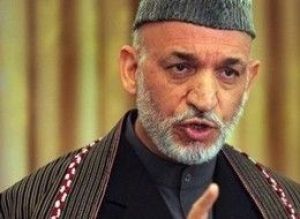 One of the country’s most senior prosecutors said yesterday that President Hamid Karzai fired him last week after he repeatedly refused to block corruption investigations at the highest levels of Karzai’s government.
Fazel Ahmed Faqiryar, the former deputy attorney general, said investigations of more than two dozen senior Afghan officials — including Cabinet ministers, ambassadors, and provincial governors — were being held up or blocked outright by Karzai, Attorney General Mohammed Ishaq Aloko, and others.
Is the US Pulling the Plug on Iraqi Workers?
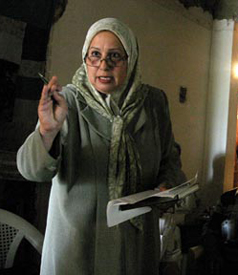 Early in the morning of July 21, police stormed the offices of the Iraqi Electrical Utility Workers Union in Basra, the poverty-stricken capital of Iraq's oil-rich south. A shamefaced officer told Hashmeya Muhsin, the first woman to head a national union in Iraq, that they'd come to carry out the orders of Electricity Minister Hussain al-Shahristani to shut the union down.
As more police arrived, they took the membership records, the files documenting often-atrocious working conditions, the leaflets for demonstrations protesting Basra's agonizing power outages, the computers and the phones. Finally, Muhsin and her coworkers were pushed out and the doors locked.
CIA making secret payments to members of Karzai administration
 The CIA is making secret payments to multiple members of President Hamid Karzai's administration, in part to maintain sources of information in a government in which the Afghan leader is often seen as having a limited grasp of developments, according to current and former U.S. officials.
The payments are long-standing in many cases and designed to help the agency maintain a deep roster of allies within the presidential palace. Some aides function as CIA informants, but others collect stipends under more informal arrangements meant to ensure their accessibility, a U.S. official said.
More Articles...
Page 54 of 121