War Glance
Congress will consider legislation Friday that could ease the way for thousands of Iraqis and Afghans to resettle in the United States to escape the dangers that come with their work for the U.S. military, news outlets and nonprofit groups.
The current version of the government’s “special immigrant visa” program expires next fall, and refugee advocates are pushing hard not only for an extension but also for sweeping changes to a process that’s been widely criticized as too slow, too narrow in eligibility and unreasonably complicated.
Iraqis, Afghans who helped U.S. in wars look to Congress for resettlement
U.S. disrupts al-Qaeda’s online magazine
U.S. intelligence operatives covertly sabotaged a prominent al-Qaeda online magazine last month in an apparent attempt to sow confusion among the group’s followers, according to officials.
The operation succeeded, at least temporarily, in thwarting publication of the latest issue of Inspire, the English-language magazine distributed by al-Qaeda in the Arabian Peninsula. When it appeared online, the text on the second page was garbled and the following 20 pages were blank. The sabotaged version was quickly removed from the online forum that hosted it, according to independent analysts who track jihadi Web sites.
'US drone' kills four in strike on al-Qaida target in Yemen
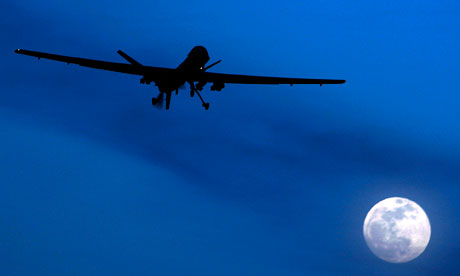 At least four people were killed and a number of others wounded in a drone strike on a vehicle carrying suspected al-Qaida members in southern Yemen, a local official said on Saturday.
The official said the strike took place at dawn on Saturday on a road to the north of Jaar in Abyan Governorate, near Aden. He did not say who was behind the strike, but previous drone strikes have been carried out by the United States. Washington does not usually comment on drone strikes.
At Senate Hearing, Yemeni Says U.S. Drone War Terrifying Civilians, Empowering Militants
 I have met with dozens of civilians who were injured during drone strikes and other air attacks," al-Muslimi states. "I have met with relatives of people who were killed as well as numerous eyewitnesses. They have told me how these air strikes have changed their lives for the worst."
On one occasion, he met a man who described how "he stood helplessly as his 4-year-old son and 6-year-old daughter died in his arms on the way to the hospital." The man's house was targeted by mistake. He reported on another strike that killed 40 civilians and spoke to a 12-year-old boy who cried while describing being afraid of the drones buzzing overhead every night.
Obama won't send witness to Senate to explain legality of drone war
The Obama administration does not intend to send a witness to testify at a Senate hearing next week on the legality of the U.S. targeted killing program, the White House said Wednesday.
The decision illustrates the limits of President Barack Obama’s pledge in his State of the Union speech on Feb. 12 to provide greater transparency into top-secret drone operations that have killed thousands of suspected terrorists in Pakistan, Somalia and Yemen.
Pentagon reportedly gave Afghan contracts to Taliban
A Pentagon audit indicates that due to a lack of oversight, some Afghan contracts went to the Taliban. The Special Inspector General for Afghanistan Reconstruction compiled the audit report.
The SIGAR audit detailed that the agency found significant weaknesses in the oversight intended to keep the U.S. Department of Defense from giving contracts to Taliban and other terrorists, adding that that the Pentagon is failing to implement fail-safes designed to prevent contracts from being given to terrorists, or following up on them afterwards to apprehend them.
U.S. secret: CIA collaborated with Pakistan spy agency in drone war
 Even as its civilian leaders publicly decried U.S. drone attacks as breaches of sovereignty and international law, Pakistan’s premier intelligence agency secretly worked for years with the CIA on strikes that killed Pakistani insurgent leaders and scores of suspected lower-level fighters, according to classified U.S. intelligence reports.
Dozens of civilians also reportedly died in the strikes in the semi-autonomous tribal region of Pakistan bordering Afghanistan that is a stronghold of al Qaida, Afghan militants, other foreign jihadists and a tangle of violent Pakistani Islamist groups.
More Articles...
Page 12 of 118