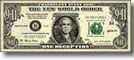




Money is the price of admission to this circus called life. It's mandatory, not optional. Without money, diddly squat gets done. Money's what greases all our skids and connects up all our dots and our lives, like it or not.
Money is, and can be, many things. However, most rational people would agree that one thing money should not be, is a club -- a weapon, pulverizing and penalizing people in pursuit of basic, daily needs.
Alex Baer: The Home Runs and Bunts of Money & Messaging
Toxic chemical flame retardants found in 85% of U.S. couches
 California’s furniture flammability standard Technical Bulletin 117 (TB 117) is believed to be a major driver of chemical flame retardant (FR) use in residential furniture in the United States.
With the phase-out of the polybrominated diphenyl ether (PBDE) FR mixture PentaBDE in 2005, alternative FRs are increasingly being used to meet TB 117; however, it was unclear which chemicals were being used and how frequently.
Nobel peace laureates call for Israel military boycott over Gaza assault
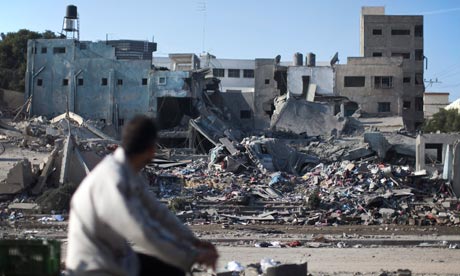 A group of Nobel peace prize-winners, prominent artists and activists have issued a call for an international military boycott of Israel following its assault on the Gaza Strip this month.
The letter also denounces the US, EU and several developing countries for what it describes as their "complicity" through weapons sales and other military support in the attack that killed 160 Palestinians, many of them civilians, including about 35 children.
In suicide epidemic, military wrestles with prosecuting troops who attempt it
 Marine Corps Pvt. Lazzaric T. Caldwell slit his wrists and spurred a legal debate that’s consuming the Pentagon, as well as the nation’s top military appeals court.
On Tuesday, the court wrestled with the wisdom of prosecuting Caldwell after his January 2010 suicide attempt. Though Caldwell pleaded guilty, he and his attorneys now question his original plea and the broader military law that makes “self-injury” a potential criminal offense.
The questions resonate amid what Pentagon leaders have called an “epidemic” of military suicides.
Wal-Mart’s strategy of deniability for workers’ safety
 Over the weekend, a horrific fire swept through a Bangladesh clothing factory, killing more than 100 workers, many of whose bodies were burnt so badly that they could not be identified. In its gruesome particulars — locked doors, no emergency exits, workers leaping to their deaths — the blaze seems a ghastly centennial reenactment of the Triangle Shirtwaist fire of 1911, when 146 workers similarly jumped to their deaths or were incinerated after they found the exit doors were locked.
The signal difference between the two fires is location. The Triangle building was located directly off New York’s Washington Square. Thousands watched the appalling spectacle of young workers leaping to the sidewalks 10 stories down; reporters and photographers were quickly on the scene.
Alex Baer: Playing with Dynamite, Tossing Numbers Around Like Grenades
The numbers are up: We now have 50 million people in our country who are poor -- while online sales on Black Friday busted one billion bucks for the first time.
The increased stats on the poor stem from a new census measure that considers medical costs and work-related expenses. The new formula also means there are more people now living below the poverty line than in 2010 -- about 16% of the population.
Interestingly, online sales from November 1st this year are also up 16% -- from the same period last year -- while the number of Americans visiting online shops this Black Friday was 57.3 million, an increase of 18%. Cyber Monday sales were expected to push past 1.5 billion dollars.
Judge orders tobacco companies to admit deception
Major tobacco companies that spent decades denying they lied to the U.S. public about the dangers of cigarettes must spend their own money on a public advertising campaign saying they did lie, a federal judge ruled on Tuesday.
The ruling sets out what might be the harshest sanction to come out of a historic case that the Justice Department brought in 1999 accusing the tobacco companies of racketeering. U.S. District Judge Gladys Kessler wrote that the new advertising campaign would be an appropriate counterweight to the companies' "past deception" dating to at least 1964.
The advertisements are to be published in various media for as long as two years.
New York Health Officials Outline Health Risks of Fracking
 Led by Dr. David O. Carpenter, Director of the Institute for Health and the Environment at the University at Albany’s School of Public Health, a number of health experts launched a new initiative, Concerned Health Professionals of New York, to outline the health risks of fracking and to renew their call for an independent, comprehensive Health Impact Assessment.
The health experts in Albany spoke on behalf of the broad medical and scientific community in New York State, where hundreds of medical professionals and scientists have been outspoken about concerns that fracking poses a threat to public health.
The Mainstream Media's Biased Coverage of the Gaza Blockade
There's reason to hope that the ceasefire between Hamas and Israel will lead to an easing of Israel's suffocating economic blockade of Gaza. The ceasefire text said that "opening the crossings and facilitating the movements of people and transfer of goods... shall be dealt with after 24 hours from the start of the ceasefire." But, more than 100 hours later, we're still waiting for word of actual progress.
Meanwhile, if you're wondering where to turn for background information about the blockade, I have this guidance: stay as far away from mainstream media as possible.
Page 407 of 1167