


 Go to your nearest tap. Light a match, and place it next to the running water. If it catches fire, as it has in many American homes, your water supply has probably been polluted by a natural-gas extraction process called fracking. If no flames appear, don’t get complacent. Fracking is becoming the gold rush of the 21st century – as well as an urgent wake-up call on the irreparable damage we are wreaking on our environment. Fracking began in Britain in March, and is probably coming to a gas reservoir near you.
Fracking, or hydraulic fracturing, involves blasting huge amounts of water, mixed with sand and often toxic chemicals, to break up shale formations thousands of feet under the earth, to release natural gas.
Frack and ruin: the rise of hydraulic fracturing
Iraq dossier drawn up to make case for war – UK intelligence officer
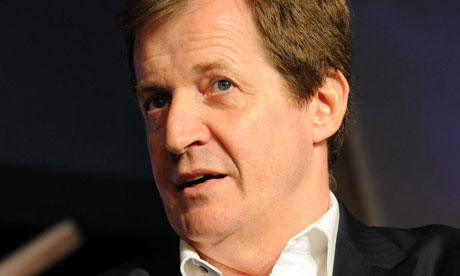 A top military intelligence official has said the discredited dossier on Iraq's weapons programme was drawn up "to make the case for war", flatly contradicting persistent claims to the contrary by the Blair government, and in particular by Alastair Campbell, the former prime minister's chief spin doctor.
In hitherto secret evidence to the Chilcot inquiry, Major General Michael Laurie said: "We knew at the time that the purpose of the dossier was precisely to make a case for war, rather than setting out the available intelligence, and that to make the best out of sparse and inconclusive intelligence the wording was developed with care."
Anti-retroviral drugs 'help reduce' HIV transmission
 An HIV-positive person who takes anti-retroviral drugs after diagnosis, rather than when their health declines, can cut the risk of spreading the virus to uninfected partners by 96%, according to a study.
The United States National Institutes of Health sampled 1,763 couples in which one partner was infected by HIV. It was abandoned four years early as the trial was so successful. The World Health Organization said it was a "crucial development".
The Uganda Anti-Gay Bill's U.S. Evangelical Roots

As in other Sub-Saharan African countries, Uganda has long had a taboo against homosexuality. But the political scapegoating of gays and lesbians is a relatively recent phenomenon, one deliberately exported by the American right.
Uganda is a country where American-style evangelical Christianity is exploding, and there are close links between many American anti-gay preachers, politicians, and activists, and their Ugandan counterparts. As Jeff Sharlet has reported, Bahati, the Anti-Homosexuality Bill’s sponsor, is the secretary of the Ugandan branch of The Family, the secretive American evangelical organization whose members include Sens. James Inhofe, Jim DeMint, and Tom Coburn.
Thought Bed Bugs Were Bad? Try Bed Bugs With MRSA
 The one bright side of having bed bugs — if you wanted to be really optimistic about it — has always been that at least the tormenting critters didn't transmit disease. But now researchers in Vancouver report that they've found bed bugs with methicillin-resistant Staphylococcus aureus, or MRSA.
The scientists studied five bed bugs, taken from three patients treated at St. Paul's Hospital. All three patients were residents of Vancouver's poor Downtown Eastside, where both bed bugs and MRSA have been on the rise in recent years. The researchers wanted to see if there was a connection.
Wikileaks cables show race to carve up Arctic
 Secret US embassy cables released by Wikileaks show nations are racing to "carve up" Arctic resources - oil, gas and even rubies - as the ice retreats.They suggest that Arctic states, including the US and Russia, are all pushing to stake a claim.
The opportunity to exploit resources has come because of a dramatic fall in the amount of ice in the Arctic. The US Geological Survey estimates oil reserves off Greenland are as big as those in the North Sea.
After approving NBC buyout, FCC Commish becomes Comcast lobbyist
 Meredith Attwell Baker, one of the two Republican Commissioners at the Federal Communications Commission, plans to step down—and right into a top lobbying job at Comcast-NBC.
Four months after approving the massive transaction, Attwell Baker will take a top DC lobbying job for the new Comcast-NBC entity, according to reports.
Unchecked Executive War Power Could Slip Through the House
 Tucked inside the National Defense Authorization Act, being marked up by the House Armed Services Committee this week, is a hugely important provision that hasn't been getting a lot of attention — a brand new authorization for a worldwide war.
This stealth provision was added to the bill by the committee's chairman, Rep. Buck McKeon (R-Calif.), but has a bit of a history. It was first proposed by former Attorney General Michael Mukasey in 2008 after the Bush administration lost the Boumediene v. Bush case, in which the Supreme Court decided that federal courts would subject the administration's asserted law of war basis to hold Guantanamo detainees to searching review.
Israel admits it covertly canceled residency status of 140,000 Palestinians
 Israel has used a covert procedure to cancel the residency status of 140,000 West Bank Palestinians between 1967 and 1994, the legal advisor for the Judea and Samaria Justice Ministry's office admits, in a new document obtained by Haaretz. The document was written after the Center for the Defense of the Individual filed a request under the Freedom of Information Law.
The document states that the procedure was used on Palestinian residents of the West Bank who traveled abroad between 1967 and 1994. From the occupation of the West Bank until the signing of the Oslo Accords, Palestinians who wished to travel abroad via Jordan were ordered to leave their ID cards at the Allenby Bridge border crossing.
Page 626 of 1167