

 The estimates were made on March 16th following explosions at the plant by an institute commissioned by the government using a computer system called SPEEDI. The system made its projections on the assumption that radioactive substances had been released for 24 hours from midnight on March 14th, based on the available data.
Govt did not reveal high level radiation estimate
Israeli troops mysteriously get cancer
 High occurrence of cancer has been detected in Israel's elite naval commando unit, apparently due to the waste disposal by Israeli firms in Kishon River.
The river, which flows into the Mediterranean Sea in the northern city of Haifa, has been used for training the unit, known as Shayetet 13.
Carmel Olefins Ltd., Israel's sole manufacturer of petrochemical products used in the plastics industry, as well as other firms have been accused of directing their waste into the river, which is notorious for being the most polluted stream in Israel.
Small cracks found in three Southwest Airlines jets
 Small, sub-surface cracks have been found in three more Southwest Airlines planes like those thought to have caused another to develop a hole in its cabin roof mid-flight, officials say.
Tests on the 57 remaining jets are expected to be completed by Tuesday evening. Further flight cancellations are likely until all are back in the air.
DAMN RIGHT: Gaining exposure
 As radiation drifts westward from the recently battered Land of the Rising Plume, the U.S. is taking all necessary precautions to prevent a nuclear disaster on their own soil. Quickest to do their part appears to be the Environmental Protection Agency, which intends to counter harmful radiation exposure by proclaiming radioactive contamination now safer than ever!
Blackwater owes North Carolina county millions in back taxes
 Xe Services, the security firm formerly known as Blackwater, owes a North Carolina county millions in back taxes, officials say.
Camden County Manager Randell Woodruff says the company, already the county's biggest taxpayer, owes almost $2.9 million, including penalties and interest, for aircraft based there but used around the world.
FDNY cancer up post-9/11

A city official for the first time is revealing a rise in cancer among firefighters who served at Ground Zero, The Post has learned.
Dr. David Prezant, the Fire Department's chief medical officer, has found that firefighters who dug for victims at the World Trade Center are getting cancer at a higher rate than firefighters before 9/11 -- and some types of cancer are "bizarrely off the charts," say sources briefed on the seven-year, federally funded study.
Prezant discussed the findings with members of a WTC medical-monitoring committee last month, several attendees said.
Why is the Federal Reserve Propping Up the Bank of Libya?
 Vermont Senator Bernie Sanders has for months been leading the charge to expose the sweetheart deals the Federal Reserve has worked out for multinational banks and corporations at the same time that working Americans, small businesses, local governments and schools boards struggle to stay afloat financially.
Sanders has tried to make the point that it is simply absurd for the Fed to bail out foreign firms and bad banks and to provide them with low-interest loans at the same time that they are reaping massive profits – and at the same time that federal, state and local governments are supposedly broke.
Transocean hails ‘best year’ in safety, gives execs bonuses, despite Gulf spill
 The company that owns the now-infamous Deepwater Horizon, the oil rig that caused immeasurable damage to the Gulf, recently applauded itself for the "best year in safety performance in our Company's history." The company, Transocean Ltd., rewarded its executives millions in bonuses for the achievement, according to the annual report it released yesterday.
Steven L. Newman, Transocean's president and CEO, awarded himself $4.3 million in cash bonuses, stocks and options.
How a big US bank laundered billions from Mexico's murderous drug gangs
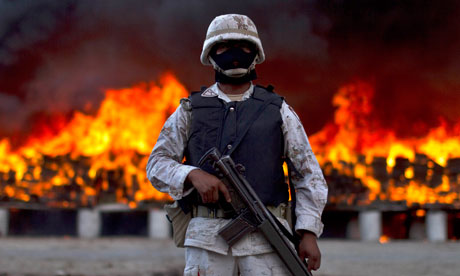
On 10 April 2006, a DC-9 jet landed in the port city of Ciudad del Carmen, on the Gulf of Mexico, as the sun was setting. Mexican soldiers, waiting to intercept it, found 128 cases packed with 5.7 tons of cocaine, valued at $100m. But something else – more important and far-reaching – was discovered in the paper trail behind the purchase of the plane by the Sinaloa narco-trafficking cartel.
During a 22-month investigation by agents from the US Drug Enforcement Administration, the Internal Revenue Service and others, it emerged that the cocaine smugglers had bought the plane with money they had laundered through one of the biggest banks in the United States: Wachovia, now part of the giant Wells Fargo.
Page 643 of 1167