
 Sperm-forming stem cells in the testes can be converted to insulin-producing cells that could replace diseased ones in the pancreas, researchers from Georgetown University Medical Center in Washington, D.C., reported December 12 at the annual meeting of the American Society for Cell Biology. The new technique is edging closer to producing the amount of insulin needed to cure diabetes in humans.
Ian Gallicano, a developmental biologist at Georgetown, and his colleagues isolated sperm-producing stem cells from the testes of organ donors. These cells could easily revert to an embryonic state, capable of making nearly any cell in the body.
Cells Reprogrammed to Treat Diabetes
As Mexico drug violence runs rampant, U.S. guns tied to crime south of border
 No other state has produced more guns seized by police in the brutal Mexican drug wars than Texas. In the Lone Star State, no other city has more guns linked to Mexican crime scenes than Houston. And in the Texas oil town, no single independent dealer stands out more for selling guns traced from south of the border than Bill Carter.
Carter, 76, has operated four Carter's Country stores in the Houston metropolitan area over the past half-century. In the past two years, more than 115 guns from his stores have been seized by the police and military in Mexico.
Autism Research: Breakthrough Discovery on the Causes of Autism
 The big debate that ranges in autism circles is about whether or not autism is a fixed, irreversible brain-based genetic disorder, or a systemic, reversible body-based biological condition that has identifiable causes, measurable abnormalities, and treatable dysfunctions. In other words is autism a life sentence or a reversible condition?
Many studies have illuminated the causes and possible treatments for autism, but mainstream physicians or scientists ignore most of this data. This new study, breaks new ground because it was published in one of the world's major medical journals.
Jailed Afghan Drug Lord Was Informer on U.S. Payroll
 When Hajji Juma Khan was arrested and transported to New York to face charges under a new American narco-terrorism law in 2008, federal prosecutors described him as perhaps the biggest and most dangerous drug lord in Afghanistan, a shadowy figure who had helped keep the Taliban in business with a steady stream of money and weapons.
But what the government did not say was that Mr. Juma Khan was also a longtime American informer, who provided information about the Taliban, Afghan corruption and other drug traffickers.
Myths and Facts: Study Verifies That There Is No Value In Any Flu Vaccine
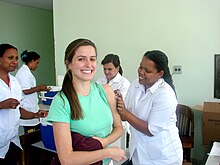 A remarkable study published in the Cochrane Libary found no evidence of benefit for influenza vaccinations and also noted that the vast majority of trials were inadequate.
The authors stated that the only ones showing benefit were industry-funded. They also pointed out that the industry-funded studies were more likely to be published in the most prestigious journals...and one more thing: They found cases of severe harm caused by the vaccines, in spite of inadequate reporting of adverse effects.
Whose Country Is This Anyway?
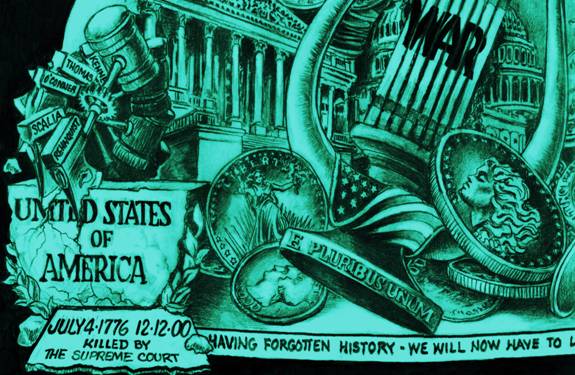 Did you actually think that this country is 'yours'? Do you understand that the Congress that supposedly represents you only works three days a week? And we won't even begin to discuss all the vacations and junkets they take when they could do it all from behind a computer. Do you know that the clients they represent are in reality the world's largest corporations and that they don't give a damn about you and never have? You and I are less than Road-Kill to these Robber-Barons, and that has been true at least since November 22, 1963. For those who might not remember that day it was the day that JFK was murdered. When he died, the hopes and dreams of millions around the world died with him.
If We Lose our Internet Freedoms Because of Wikileaks, You Should At Least Know Why
 Now remember and read closely… this article was written PRIOR to Wikileaks’ first big “leak”, which according to the article was to occur sometime in March of 2007.
So why would TIME magazine be writing about them in the first place if they hadn’t done anything yet? Also, let’s not pass up on that delicious irony: this is TIME magazine singing the praises of a supposed “leak” site which will supposedly expose all kinds of “conspiracy theories” while at the same time telling their readers NOT to believe in those silly “conspiracy theories” circulating about Wikileaks. Just so long as you believe the “right” conspiracy theories, you’ll be alright I guess. This of course perfectly matches Jullian Assange’s own statements about 9/11.
A Secretive Banking Elite Rules Trading in Derivatives
 On the third Wednesday of every month, the nine members of an elite Wall Street society gather in Midtown Manhattan. The men share a common goal: to protect the interests of big banks in the vast market for derivatives, one of the most profitable — and controversial — fields in finance. They also share a common secret: The details of their meetings, even their identities, have been strictly confidential.
Drawn from giants like JPMorgan Chase, Goldman Sachs and Morgan Stanley, the bankers form a powerful committee that helps oversee trading in derivatives, instruments which, like insurance, are used to hedge risk.
WikiLeaks' advocates are wreaking 'hacktivism'
 Since releasing a vast cache of diplomatic cables this month, the anti-secrecy group WikiLeaks has been the focus of intense criticism: for divulging classified materials, embarrassing the U.S. government and potentially endangering lives. But it has also engendered the frenzied support of an expanding and loosely defined global collective that seems intent on speaking out - and in some cases waging war on WikiLeaks' behalf.
The most prominent of those groups is known as Anonymous, which this past week sought to disable the Web sites of several U.S. companies as part of what it called Operation Payback.WikiLeaks has also drawn the support of traditional civil rights organizations and advocacy groups, which see the controversy surrounding WikiLeaks as an important test of U.S. commitment to freedom of the Internet.
Page 701 of 1167