

 A group of military veterans are suing to get the CIA to come clean about allegedly implanting remote control devices in their brains.
It's well known that the CIA began testing substances like LSD on soldiers beginning in the 1950s but less is known about allegations that the agency implanted electrodes in subjects.
CIA implanted electrodes in brains of unsuspecting soldiers, suit alleges
Uprooting the Bedouins of Israel
 Despite the fact that it was the seventh demolition since last July, this time the destruction of the Bedouin village Al-Arakib in the Israeli Negev was different.
The difference is not because the homeless residents have to deal this time with the harsh desert winter; nor in the fact that the bulldozers began razing the homes just minutes before the forty children left for school, thus engraving another violent scene in their memory. Rather, the demolition was different because this time Christian evangelists from the United States and England were involved.
Daniel Ellsberg Says Boycott Amazon
 I’m disgusted by Amazon’s cowardice and servility in abruptly terminating today its hosting of the Wikileaks website, in the face of threats from Senator Joe Lieberman and other Congressional right-wingers. I want no further association with any company that encourages legislative and executive officials to aspire to China’s control of information and deterrence of whistle-blowing.
For the last several years, I’ve been spending over $100 a month on new and used books from Amazon. That’s over. I ask Amazon to terminate immediately my membership in Amazon Prime and my Amazon credit card and account, to delete my contact and credit information from their files and to send me no more notices.
Government reports violations of limits on spying aimed at U.S. citizens
 The federal government has repeatedly violated legal limits governing the surveillance of U.S. citizens, according to previously secret internal documents obtained through a court battle by the American Civil Liberties Union.
In releasing 900 pages of documents, U.S. government agencies refused to say how many Americans' telephone, e-mail or other communications have been intercepted under the Foreign Intelligence Surveillance Act - or FISA - Amendments Act of 2008, or to discuss any specific abuses, the ACLU said. Most of the documents were heavily redacted.
Pair of conservative groups raised $70 million in midterm campaign
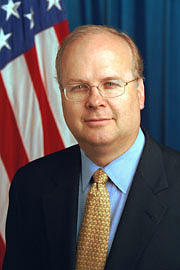 A pair of conservative groups founded with the help of Republican political guru Karl Rove raised more than $70 million since their inception last spring, making them the undisputed leaders of an onslaught of outside spending during the 2010 midterm campaign, according to new disclosures Thursday.
American Crossroads, a "super PAC" that can raise and spend as much money as it wants, took in nearly $28 million in donations, weighted heavily with large contributions from financiers, oil tycoons and other wealthy individuals, according to filings with the Federal Election Commission.
Nigeria to Charge Dick Cheney in Pipeline Bribery Case
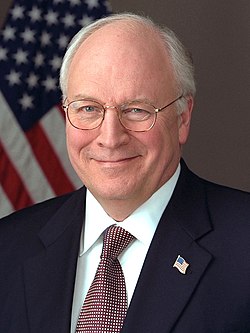 Nigeria will file charges against former U.S. Vice President Dick Cheney and officials from five foreign companies including Halliburton Co. over a $180 million bribery scandal, a prosecutor at the anti-graft agency said.
Indictments will be lodged in a Nigerian court “in the next three days,” Godwin Obla, prosecuting counsel at the Economic and Financial Crimes Commission, said in an interview today at his office in Abuja, the capital. An arrest warrant for Cheney “will be issued and transmitted through Interpol,” the world’s biggest international police organization, he said.
Obama and GOPers Worked Together to Kill Bush Torture Probe
 In its first months in office, the Obama administration sought to protect Bush administration officials facing criminal investigation overseas for their involvement in establishing policies the that governed interrogations of detained terrorist suspects.
A "confidential" April 17, 2009, cable sent from the US embassy in Madrid to the State Department—one of the 251,287 cables obtained by WikiLeaks—details how the Obama administration, working with Republicans, leaned on Spain to derail this potential prosecution.
Controversial Drug Given to All Guantanamo Detainees Akin to "Pharmacologic Waterboarding"
 The Defense Department forced all "war on terror" detainees at the Guantanamo Bay prison to take a high dosage of a controversial antimalarial drug, mefloquine, an act that an Army public health physician called "pharmacologic waterboarding."
The US military administered the drug despite Pentagon knowledge that mefloquine caused severe neuropsychiatric side effects, including suicidal thoughts, hallucinations and anxiety. The drug was used on the prisoners whether they had malaria or not.
TSA frisks groom children to cooperate with sex predators, abuse expert says
 An expert in the fight against child sexual abuse is raising the alarm about a technique the TSA is reportedly using to get children to co-operate with airport pat-downs: calling it a "game".
Telling a child that they are engaging in a game is "one of the most common ways" that sexual predators use to convince children to engage in inappropriate contact, Wooden told Raw Story.
Page 705 of 1167