


 Faced with a crisis more than a decade ago in which thousands of people were sickened from salmonella in infected eggs, farmers in Britain began vaccinating their hens against the bacteria. That simple but decisive step virtually wiped out the health threat.
But when American regulators created new egg safety rules that went into effect last month, they declared that there was not enough evidence to conclude that vaccinating hens against salmonella would prevent people from getting sick. The Food and Drug Administration decided not to mandate vaccination of hens — a precaution that would cost less than a penny per a dozen eggs.
 In the chaotic days after Hurricane Katrina, an order circulated among New Orleans police authorizing officers to shoot looters, according to present and former members of the department.
 Allowing Fox News to move up to the first row in the White House briefing room was a "travesty of a decision," according to Ed Chen, the former White House Correspondents Association president who left that post just a few months ago.
 The company formerly known as Blackwater violated U.S. export control laws nearly 300 times, ranging from attempts to do business in Sudan while that country was under U.S. sanctions to training an Afghan border patrol official who was a native of Iran, the State Department said Monday.
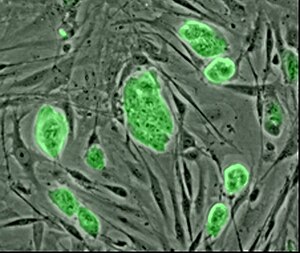 A federal judge on Monday temporarily blocked Obama administration regulations expanding stem cell research. The nonprofit group Nightlight Christian Adoptions contends that the government's new guidelines will decrease the number of human embryos available for adoption.
 CEO of company developing light rail project supports providing 'kosher' cars for city's ultra-Orthodox population. CityPass CEO Yair Naveh said Monday that he supports segregated men only and women only cars on the Jerusalem light rail train, which reporters and officials were invited to ride in a celebratory ceremony on Monday
 Researchers found a protein triggered by rheumatoid arthritis could undo the "tangles" in the brain that are thought to cause Alzheimer's. Memory loss associated with the disease was partially reversed by the protein, GM-CSF, which also lowered the risk of getting the illness.
 The opponents of the proposed Cordoba Initiative Islamic center planned for Lower Manhattan are fond of suggesting, by way of lengthy and often confusing chains of causation and association, that its principal planner, Imam Feisal Abdul Rauf, is connected to terrorism.
 A retired FBI agent has come forward with evidence that President John F. Kennedy was not killed by Lee Harvey Oswald in Dallas, Texas on Nov 22, 1963.