Environmental News Archive



 A new report1 on shale resources and hydraulic fracturing from the Government Accountability Office (GAO)—an independent, nonpartisan agency that works for Congress—concludes that fracking poses serious risks to health and the environment.
The report, which reviewed studies from state agencies overseeing fracking as well as scientific reports, found that the extent of the risks has not yet been fully quantified and that there are many unanswered questions and a lack of scientific data.
 September 2012 tied for the warmest September on record worldwide, scientists from the National Oceanographic and Atmospheric Administration announced Monday.
 The Wizard of Oz was spot on when he said to “Pay no attention to the man behind the curtain.” That’s good life advice if you fall into the “Ignorance is bliss” camp. For a journalist though, it’s doing the exact opposite that’s a sin qua non for the job.
 According to a Department of Justice press release, Chesapeake Appalachia pled guilty on Oct. 5 in federal court to three violations of the Clean Water Act related to natural gas drilling activity in northern West Virginia. The press release states:
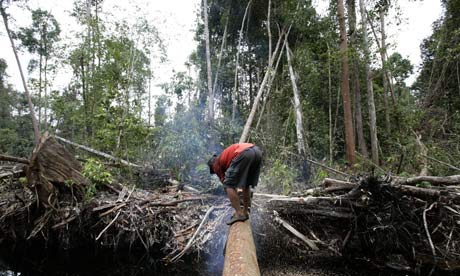 Environmentalists campaigning to prevent the wholesale destruction of the Indonesian rainforest scored a major victory on Wednesday after coaxing the Walt Disney company, one of the world's largest publishers of children's books, to revamp its paper purchasing policies and sever ties with two of Asia's most controversial pulp and paper manufacturers.
 The 16-month battle against the Minisink Compressor project in Orange County, NY, has been ramping up dramatically over the last week, and it appears to be far from over.
 Paula Getzelman and her neighbors in the Southern Monterey County Rural Coalition have three tasks on their agenda:
 Fifteen residents of Corpus Christi, Texas — so sickened by pollution they have been deemed crime victims — are asking a federal judge to force Citgo Petroleum Corp. to set up multimillion-dollar trust funds to cover medical and relocation costs, in a case with national ramifications.