Military Glance
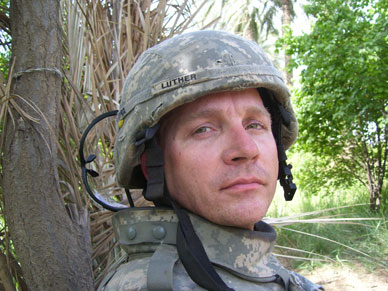
Those who are discharged with PD are denied a lifetime of disability benefits, which the military is required to provide to soldiers wounded during service. Soldiers discharged with PD are also denied long-term medical care. And they have to give back a slice of their re-enlistment bonus. That amount is often larger than the soldier's final paycheck. As a result, on the day of their discharge, many injured vets learn that they owe the Army several thousand dollars.
According to figures from the Pentagon and a Harvard University study, the military is saving billions by discharging soldiers from Iraq and Afghanistan with personality disorder.
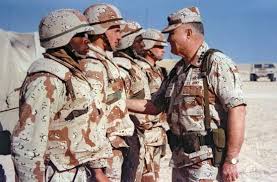 As many as 250,000 veterans of the first Gulf War "have persistent unexplained medical symptoms" whose cause may never be found, although genetic testing and functional brain imaging may eventually shed some light on the problem.
 A federal judge in North Carolina says Camp Lejeune officials violated the rights of a military veteran who came to a job on base with anti-Islamic decals on his vehicle.
 The Pentagon was overwhelmed by the number of applicants, which had grown from an average of about 10,000 a month to 70,000 in January alone as the nation's economy continued to sputter. Money for the Military Spouse Career Advancement Accounts program, known as MyCAA, was rapidly running out. Rather than ask Congress for more cash, Pentagon officials decided to close the program to new applicants and stop payments to those who were already enrolled.
 Defense Secretary Robert Gates' top deputy will brief the Joint Chiefs of Staff today on his recommendations to regulate the Pentagon's practice of hiring retired senior officers to advise the military, Gates' spokesman said.
 The U-2 spy plane, the high-flying aircraft that was often at the heart of cold war suspense, is enjoying an encore. Four years ago, the Pentagon was ready to start retiring the plane, which took its first test flight in 1955. But Congress blocked that, saying the plane was still useful.
 In the years since the Sept. 11, 2001, attacks, 967 American service members have lost at least one limb, as of March 1. Of them, 229 have lost more than one. The number of amputees mounted steadily as the U.S. military stormed into Afghanistan in late 2001, then focused on Iraq -- with an invasion in 2003 and a "surge" in 2007. More recently, the number has edged up again as the Obama administration has pumped more troops into Afghanistan.