

 In August 2005, two lobbyists with the American Israel Public Affairs Committee (AIPAC), Steve Rosen and Keith Weissman, were indicted on charges of illegally conspiring to collect and disseminate classified secrets to journalists and to Israeli diplomats.
The case, in which the two men were charged under a World War I-era espionage law along with Larry Franklin, a midlevel Iran analyst at the Department of Defense, was intimately linked to efforts by the AIPAC officials and others to improperly influence U.S. policy toward Iran, said prosecutors, and it caused a political firestorm in Washington. However, in 2009, the case fell apart, and the Justice Department withdrew all charges.
 A new initiative could deprive Israeli human rights organizations that cooperated with the Goldstone Commission from benefiting from National Service civilian volunteers.
 The United States is a low-tax country. That’s true for individuals and for corporations, and it’s true whether you compare us to other countries or the America of the past. No matter how you slice it the conclusion is the same.
 Thanks to the fantastic work of Bilderberg activists, journalists and the Swiss media, we have now been able to obtain the full official list of 2011 Bilderberg attendees. Routinely, some members request that their names be kept off the roster so there will be additional Bilderbergers in attendance.
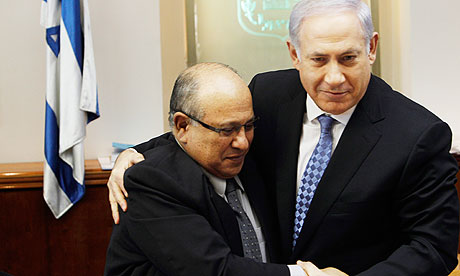 The former head of Israel's spy service has launched an unprecedented attack on the country's current government, describing it as "irresponsible and reckless", and has praised Arab attempts to reach an Israeli-Palestinian peace agreement.
 But this isn't privacy. It's hiding. It's a child hiding behind the curtains in case the monsters see it, and I find it weirdly infantile. Oddly unconfident. Grown-ups, happy in what they're doing, don't slide down in their car seats and slip in through side doors. You've got the world's most powerful people sneaking around like naughty kiddies. Naughty kiddies with secret service spotters on their hotel roof, and armed men on motorbikes flanking their limousines.
 Billionaire brothers David and Charles Koch have been dominant financiers for conservative front groups and nonprofits for nearly three decades. Their money has flowed to organizations dedicated to lobbying for corporate and upper income tax cuts, as well as to groups responsible for mobilizing Tea Party rallies against President Obama.
 The disclosure of the Pentagon Papers four decades ago stands as one of the most significant leaks of classified material in American history. Ever since, in the eyes of the government, the voluminous record of U.S. involvement in Vietnam has remained something else: classified.
 In 1953 my family—my parents and their four boys, aged 4 to 12, I was 10—moved from the suburbs of Washington, D.C., to Israel, where we remained for seven years. My father was what might be called a McCarthy refugee, a former Truman administration official who was also a “premature anti-fascist” (look it up) and thus not eminently employable in that chilly era of Red-hunting.