Environmental News Archive




 As part of the Obama Administration’s continuing commitment to open government, the U.S. Environmental Protection Agency (EPA) has published the latest data on industrial releases and transfers of toxic chemicals in the United States between Jan. 1 and Dec. 31, 2009.
EPA is making the Toxics Release Inventory (TRI) data available within weeks of the reporting deadline through its Web site and in the popular tools, TRI Explorer and Envirofacts. The database contains environmental release and transfer data on nearly 650 chemicals and chemical categories reported to EPA by more than 21,000 industrial and other facilities.
 Companies with a financial interest in a weed-killer sometimes found in drinking water paid for thousands of studies federal regulators are using to assess the herbicide’s health risks, records of the U.S. Environmental Protection Agency show. Many of these industry-funded studies, which largely support atrazine’s safety, have never been published or subjected to an independent scientific peer review.
_thumb_medium269_190.jpg) An Israeli company - The Ma'ale Adumim Planning and Development Company Ltd has been managing the Abu Dis landfill, near the neighborhood of Abu Dis, since 1998. The site receives waste from Jerusalem and the surrounding localities. The 430-dunam site receives huge amounts of waste every day, from Jerusalem, Ma'ale Adumim and the surrounding localities. This same company is also vigorously selling off industrial land development which also sits over the top of the water aquifers that are so vital to the region. The combination of the landfill site and industrial development over such a precious resource will have devastating effects on the population. When both landfill waste and industrial run off are added together the toxic plumes that radiate out from such locations will not only contaminate the public water supply but will also eventually be picked up by submersible pumps that water vast tracts of agricultural land.
An Israeli company - The Ma'ale Adumim Planning and Development Company Ltd has been managing the Abu Dis landfill, near the neighborhood of Abu Dis, since 1998. The site receives waste from Jerusalem and the surrounding localities. The 430-dunam site receives huge amounts of waste every day, from Jerusalem, Ma'ale Adumim and the surrounding localities. This same company is also vigorously selling off industrial land development which also sits over the top of the water aquifers that are so vital to the region. The combination of the landfill site and industrial development over such a precious resource will have devastating effects on the population. When both landfill waste and industrial run off are added together the toxic plumes that radiate out from such locations will not only contaminate the public water supply but will also eventually be picked up by submersible pumps that water vast tracts of agricultural land. Through a chemical fingerprinting process, University of South Florida researchers have definitively linked clouds of underwater oil in the northern Gulf of Mexico to BP's runaway Deepwater Horizon well — the first direct scientific link between the subsurface oil clouds commonly known as "plumes" and the BP oil spill, USF officials said Friday.
 A Dutch court has fined an oil trading company $1.28m for exporting toxic waste to the Ivory Coast, and concealing the dangerous nature of the material. The judge hearing the case at Amsterdam district court on Friday said Trafigura had carried out what European regulations aimed to prevent: "Namely the export of waste to the Third World and harming the environment".
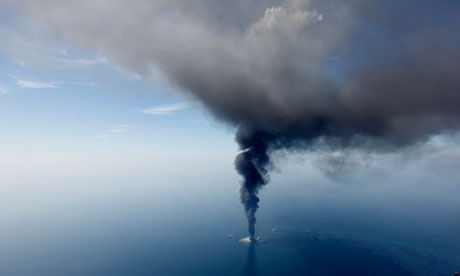 Vital warning systems on the Deepwater Horizon oil rig were switched off at the time of the explosion in order to spare workers being woken by false alarms, a federal investigation has heard.
 UK defense secretary says American and British forces used depleted uranium (DU) ammunitions during the US-led invasion of Iraq in 2003.
 The head of the American Association of Professors has accused BP of trying to "buy" the best scientists and academics to help its defence against litigation after the Gulf of Mexico oil spill. "This is really one huge corporation trying to buy faculty silence in a comprehensive way," said Cary Nelson.
 A confidential survey of workers on the Deepwater Horizon in the weeks before the oil rig exploded showed that many of them were concerned about safety practices and feared reprisals if they reported mistakes or other problems.