Environmental Glance
Sea surface temperatures on the continental shelf off the U.S. Northeast and Canada have reached their highest levels in 150 years, researchers say.
Scientists with the National Oceanographic and Atmospheric Administration said the record-high sea surface temperatures of 57.2 degrees F in 2012 are the latest in a trend of above average temperature recorded during the spring and summer seasons.
The readings are part of a pattern of elevated temperatures occurring in the Northwest Atlantic but not seen elsewhere in the ocean basin over the past century, researchers at NOAA's Northeast Fisheries Science Center said.
Sea temperatures off U.S. Northeast and Canada highest in 150 years
Fracking Truck Sets Off Radiation Alarm At Pennsylvania Landfill
 A truck carrying drill cuttings from a hydraulic fracturing pad in the Marcellus Shale was rejected by a Pennsylvania landfill Friday after it set off a radiation alarm, according to published reports. The truck was emitting gamma radiation from radium 226 at almost ten times the level permitted at the landfill.
The MAX Environmental Technologies truck was first quarantined at the landfill, which is operated by MAX, and then sent back to the fracking pad—Rice Energy’s Thunder II pad in Greene County—to be redirected to a site that can accept higher levels of radiation.
'Gasland Part II' Director Josh Fox on the Fight Against Fracking
Three years after the Oscar-nominated documentary Gasland secured fracking a place in the global lexicon, director Josh Fox returns with Gasland Part II, which premiered this weekend at the 2013 Tribeca Film Festival.
The sequel opens with quick cuts of Republicans and Democrats extolling the virtues of natural gas drilling, setting viewers up for a rollercoaster ride through government and corporate accountability. Like his first film, Fox spotlights the various health problems and water contamination issues facing individuals that live near gas wells.
Part II, which will premiere on HBO this summer, also charts the EPA's progress and interviews members of the the scientific community. Rolling Stone spoke with Fox about gas infrastructure and what it's like to get kicked off Capitol Hill.
Sandra Steingraber writes Earth Day letter from jail
The following was letter was written from the Chemung County Jail in Elmira, New York where Steingraber is serving a fifteen day sentence for blockading a gas compression rig last month owned by the Inergy gas company near her home in the Finger Lakes region of the state:
This morning – I have no idea what time this morning, as there are no clocks in jail, and the florescent lights are on all night long – I heard the familiar chirping of English sparrows and the liquid notes of a cardinal. And there seemed to be another bird too – one who sang a burbling tune. Not a robin–wren? The buzzing, banging, clanking of jail and the growled announcements of guards on their two-way radios – which also go on all night – drowned it out. But the world, I knew, was out there somewhere.
Late 20th century was warmest in 1,400 years
Earth was cooling until the end of the 19th century and a hundred years later, the planet's surface was on average warmer than at any time in the previous 1,400 years, according to climate records presented on Sunday.
In a study spanning two millennia published in Nature Geoscience, scientists said a "long-term cooling trend" around the world swung into reverse in the late 19th century.
In the 20th century, the average global temperature was 0.4 degrees Celsius (0.7 degrees Fahrenheit) higher than that of the previous 500 years, with only Antarctica bucking the trend.
You Have to See It to Believe It: What It's Like to Have Fracking in Your Backyard
Ed Wade’s property straddles the Wetzel and Marsh county lines in rural West Virginia and it has a conventional gas well on it. “You could cover the whole [well] pad with three pickups,” said Wade. And West Virginia has lots of conventional wells — more than 50,000 at last count.
West Virginians are so well acquainted with gas drilling that when companies began using high-volume horizontal hydraulic fracturing in 2006 to access areas of the Marcellus Shale that underlie the state, most residents and regulators were unprepared for the massive footprint of the operations and the impact on their communities.
Fla. AG files suit against BP over 2010 spill
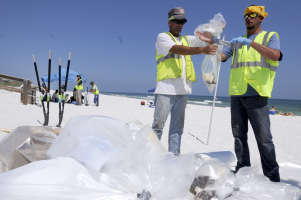
Bondi filed on Saturday on the three-year anniversary of the tragedy that killed 11 rig workers in the Gulf of Mexico and fouled 1,100 miles of beaches and marsh along the Gulf coast.
More Articles...
Page 72 of 203