War Glance
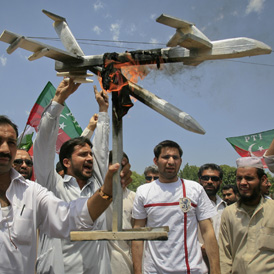 Nations which carry out drone attacks must confirm and report who is killed, say lawyers in a newly published study on the legality of attacks by the unmanned aircraft.
Independent think-tank Oxford Research Group (ORG) has published a report which claims an "existing but previously unacknowledged requirement in law" has been identified that says all parties involved in drone attacks are legally obliged to search for and identify all persons killed in strikes.
 "There is a lot of money missing during the first American administration of Iraqi money in the first year of occupation.
 In December 2010, commander of US and NATO forces in Afghanistan General David Petraeus claimed in an interview that a total of 4,100 Taliban rank and file had been captured and 2,000 others had been killed in the space of six months.
 American and Afghan officials are locked in increasingly acrimonious secret talks about a long-term security agreement which is likely to see US troops, spies and air power based in the troubled country for decades.
 U.S. Defense officials still cannot say what happened to $6.6 billion, sent by the planeload in cash and intended for Iraq's reconstruction after the start of the war.
 The US mission in Baghdad remains the world's largest embassy, built on a tract of land about the size of the Vatican and visible from space. It cost just $736 million to build—or was it $1 billion, depending on how you count the post-construction upgrades and fixes?
 America's military alliance with Europe - the cornerstone of U.S. security policy for six decades - faces a "dim, if not dismal" future, U.S. Defense Secretary Robert Gates said Friday in a blunt valedictory address.