War Glance
 Former US Defence Secretary Donald Rumsfeld remains largely defiant about the Iraq war, saying in a new book that had Saddam Hussein remained in power, the Middle East would be "far more perilous than it is today".
Mr Rumsfeld, 78, has written an autobiography due out next week.He concedes he could have sent more troops, and that internal US rivalries hampered post-war reconstruction. Leaked excerpts have been published by the Washington Post and New York Times.
Rumsfeld defends Iraq war handling
Human Rights Watch: Maliki's security forces abusing detainees at secret sites
 Elite security forces under the control of Prime Minister Nouri al-Maliki are operating secret detention sites in Baghdad at which prisoners are being abused, according to a report by the watchdog group Human Rights Watch released Tuesday. One of the sites is at a military base where U.S. forces maintain an advisory team, the U.S. military confirmed.
Former prisoners who were held at another of the facilities, a military base in the Green Zone that was vacated by U.S. troops last summer, have told Human Rights Watch researchers that detainees there were regularly abused, by being hung upside down, beaten and given electric shocks to various body parts, including the genitals.
Afghan elite 'plundered $900m' from leading bank
 A coterie of well-connected Afghan businessmen and politicians may have plundered as much as $900m from the country's biggest commercial bank, three times the amount of earlier estimates, and the equivalent of about 7 per cent of Afghanistan's total gross domestic product.
Kabul Bank's funds were treated like personal accounts, it is claimed by several well-known members of Afghan society. Mahmoud Karzai, a brother of the Afghan President and prominent shareholder in Kabul Bank, told The New York Times that the bank's former chairman lent himself about $98m (£62m) to buy one of Afghanistan's airlines, and then used deposits to subsidise the carrier in an attempt to drive rivals out of business.
Afghans Plan to Stop Recruiting Children as Police
 Afghanistan is expected to sign a formal agreement with the United Nations on Sunday to stop the recruitment of children into its police forces and ban the common practice of boys being used as sex slaves by military commanders, according to Afghan and United Nations officials.
The effort by Afghanistan’s international backers to rapidly expand the country’s police and military forces has had the unintended consequence of drawing many under-age boys into service, the officials conceded.
Bomb strikes funeral as blasts kill 40 in Baghdad
 A car bomb ripped through a funeral tent in a mainly Shiite area of Baghdad on Thursday, the deadliest in a series of attacks that killed at least 40 people.
The blasts were the latest in more than a week of bombings that have killed more than 200 people, raising concerns about an uptick in violence as the U.S. military prepares to withdraw from the country.
Number of U.S. casualties from roadside bombs in Afghanistan skyrocketed from 2009 to 2010
 The number of U.S. troops killed by roadside bombs in Afghanistan soared by 60 percent last year, while the number of those wounded almost tripled, new U.S. military statistics show.
All told, 268 U.S. troops were killed by the improvised explosive devices, or IEDs, in 2010, about as many as in the three previous years combined, according to the figures, obtained by The Washington Post. More than 3,360 troops were injured, an increase of 178 percent over the year before.
ALASTAIR CAMPBELL SLIP OVER WAR CRIMES ‘GUILT’
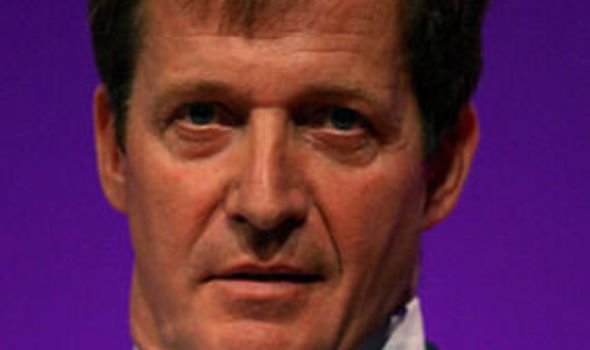 ALASTAIR Campbell heaped further pressure on Tony Blair by admitting he and the former Prime Minister should face prosecution for war crimes if the invasion of Iraq is found to be illegal.
In a rare slip-up, the spin doctor confessed that if it was found to be unlawful, those who took the country into war “should be punished”. He then tried to squirm out of his comments, made during a debate on BBC1’s Question Time, insisting the war in 2003 was lawful.
More Articles...
- Tony Blair's promise to George Bush: count on us on Iraq war
- Iraq war inquiry Tony Blair 'regrets' Iraq deaths but says Britain must stop apologising for invasion
- Tony Blair had way out of Iraq invasion, Chilcot inquiry told
- At last, the damning evidence that should bury Blair for his lies over Iraq
Page 40 of 120