War Glance
 The Iraq war was mounted on flawed intelligence, was executed with “wholly inadequate” planning, and ended “a long way from success,” according to a damning report released Wednesday by the head of Britain’s Iraq War inquiry.
Retired civil servant John Chilcot, who oversaw the seven-year inquiry, said “the U.K. chose to join the invasion of Iraq before the peaceful options for disarmament had been exhausted. Military action at that time was not a last resort.”
Scathing report in Britain slams Tony Blair over Iraq War
What Donald Rumsfeld Knew We Didn’t Know About Iraq
On September 9, 2002, as the George W. Bush administration was launching its campaign to invade Iraq, a classified report landed on the desk of the chairman of the Joint Chiefs of Staff. It came from Defense Secretary Donald Rumsfeld, and it carried an ominous note.
“Please take a look at this material as to what we don’t know about WMD,” Rumsfeld wrote to Air Force General Richard Myers. “It is big.”
The report was an inventory of what U.S. intelligence knew—or more importantly didn’t know—about Iraqi weapons of mass destruction. Its assessment was blunt: “We’ve struggled to estimate the unknowns. ... We range from 0% to about 75% knowledge on various aspects of their program.”
U.S. soldier killed, two wounded in Afghanistan
One U.S. soldier was killed during a joint U.S.-Afghan Special Operations mission in Afghanistan, two U.S. defense officials told CNN on Tuesday.
Defense officials said a medical helicopter was hit by mortar fire while on the ground but was able to take off. The incident occurred in Marjah in Helmand Province.
U.S., Russia dominate arms transfers to developing countries
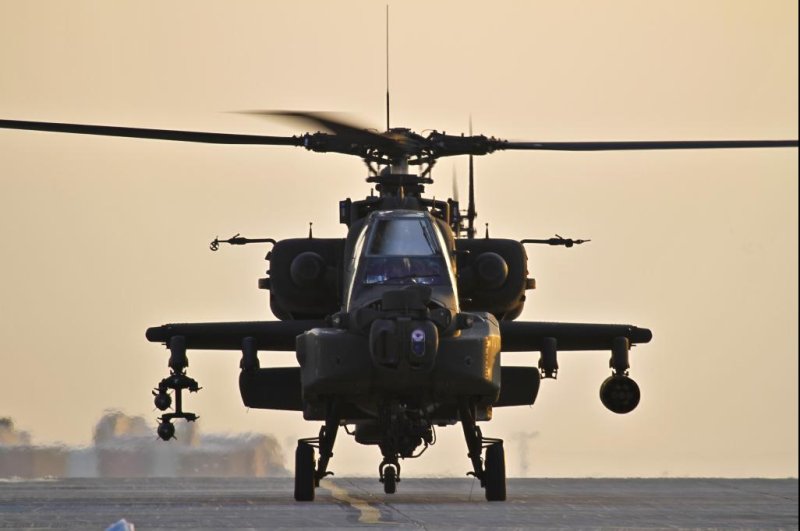 The United States and Russia dominated government-to-government arms transfer agreements with developing countries from 2011 to 2014.
According to the U.S. Congressional Research Service, arms transfer agreements with developing nations constituted 75.5 percent of all such agreements globally from 2011 to 2014, and 86.0 percent of agreements in 2014.
Judge denies new trial bid for ex-US guards in Iraq shooting
A federal judge won't give a new trial to four former security contractors convicted in a mass shooting of Iraqi civilians in 2007.
U.S. District Judge Royce Lamberth denied the request in an order dated Tuesday, saying the "weight of evidence is heavily against the men."
The guards — State Department contractors for the Blackwater Worldwide security firm — were convicted last year in federal court and given long prison sentences in April.
The Intercept publishes secret military documents on drone killings
 Secret military documents published Thursday by The Intercept detail the extent to which the White House uses its drone program, citing an unnamed source who said he wanted to make the information available so that the public will know how the decisions to make the strikes happen.
Among the findings of the investigation: The Pentagon's Intelligence, Surveillance and Reconnaissance unit circulated a paper in 2013 that found that the drone strikes, or targeted killings, often rely upon shaky intelligence and when executed, often compromise further gathering of intelligence.
Top general on Afghan hospital raid: US brass behind decision to strike
 The top U.S. commander in Afghanistan, Gen. John Campbell, accepted the United States’ responsibility Tuesday for deadly airstrikes on an Afghan hospital in which 22 people were killed, stating that the attack was a “mistake” but that the ultimate decision to shell the facility was made by the U.S. chain of command.
“To be clear, the decision to provide aerial fire was a U.S. decision made within the U.S. chain of command,” he told a Senate committee on Tuesday. It came a day after the U.S. announced that the hospital was hit after a request from local forces, who claimed they were under fire from Taliban fighters at the medical center in the strategic northern city of Kunduz.
More Articles...
Page 9 of 120