Environmental News Archive




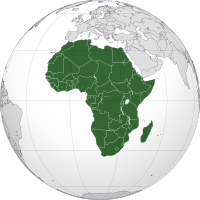 Under President George W. Bush, the United States withdrew from its decades-long role as a global leader in supporting family planning, driven by a conservative ideology that favored abstinence and shied away from providing contraceptive devices in developing countries, even to married women.
Bush birth control policies helped fuel Africa's baby boom
US climate agency declares CO2 public danger
 The Obama administration adopted its climate change plan B today, formally declaring carbon dioxide a public danger so that it can cut greenhouse gas emissions even without the agreement of a reluctant Senate.
The timing of the announcement – in the opening hours of the UN's Copenhagen climate change summit – prevents Barack Obama from arriving at the talks without concrete evidence that America will do its bit to cut the emissions that cause global warming.
Obama administration OKs oil drilling in Arctic off Alaska
 The Interior Department today gave the go-ahead for Shell Oil to begin drilling three exploratory wells in the Chukchi Sea, a move that opens the door for production in a new region of the Arctic.
Used computers toxifying kids, polluting oceans
 Out of Africa comes the disturbing news of entire regions being toxified and polluted by the industry of recycling used computers. There are millions of discarded computers on this planet, and many of them are ending up in African villages as well as elsewhere, including China, India, Nigeria, the Philippines and Vietnam, replete with highly toxic chemicals and heavy metals.
Group promoting climate skepticism has extensive ties to Exxon-Mobil
 A group promoting skepticism over widely-accredited climate change science has a web of connections to influential oil giant Exxon-Mobil, Raw Story has found.
The General Electric superfraud: Why the Hudson River will never run clean
 Regulators have long warned that fish in the Hudson are contaminated with a wide array of harmful pollutants, including PCBs and mercury, and consumption recommendations vary depending on species and the particular stretch of river. Anglers are advised not to eat more than one meal per month of striped bass, for example, and Hudson river eels should never be eaten. Fishing piers in New York City are posted with signs saying that women of childbearing age and children under fifteen should not eat any local fish. Commercial fishing, with narrow exceptions, has been banned for decades, though poaching is relatively common. Official contamination levels are hard to come by, especially now that PCB levels in the river are about three times normal due to the dredging. In 2008 the average PCB level in smallmouth bass was 188 parts per million; the average in striped bass was 22 ppm. The maximum allowable exposure level for humans is 2 ppm.
Cocaine, Spices, Hormones Found in Drinking Water
 Around the world, scientists are finding trace amounts of substances—from sugar and spice to heroine, rocket fuel, and birth control—that might be having unintended consequences for humans and wildlife alike.
The Halliburton Loophole
 Among the many dubious provisions in the 2005 energy bill was one dubbed the Halliburton loophole, which was inserted at the behest of — you guessed it — then-Vice President Dick Cheney, a former chief executive of Halliburton.
Campaign Against Emissions Picks Number 350
 Campaigners against global warming have drawn on an arsenal of visually startling tactics over the years, from posing nude on a Swiss glacier to scaling smokestacks at coal-fired power plants.
On Saturday, they tried something new with the goal of prodding countries to get serious about reaching an international climate accord: a synchronized burst of more than 4,300 demonstrations, from the Himalayas to the Great Barrier Reef, all centered on the number 350.
More Articles...
Page 138 of 159