The Supreme Court said President Donald Trump must allow Lisa Cook to remain on the Federal Reserve for now, rejecting his bid to immediately fire her from the central bank, which has broad influence over the economy through its interest rate decisions.
Rather than grant Trump’s emergency request for her to be fired, the high court said it would hear oral arguments on the issue in January.
The justices are already set to consider a similar case on the Federal Trade Commission, which raises the issue of whether Congress or the courts can protect leaders of independent agencies from removal by the president.
Supreme Court says Trump cannot, for now, remove Lisa Cook from Fed; will take up matter in January
The Federal Reserve’s independence is about to be tested like never before
The time has come to ban the “revolving door” between the White House and the Federal Reserve, two academics argued last year. Doing so would be “critical to reducing the incentives for officials to act in the short-term political interests of the president”, they wrote.
Eight months ago, the two writers – Dan Katz and Stephen Miran – joined the Trump administration in senior roles. On Tuesday, Miran, the chair of the US council of economic advisers, walked into the Fed as a governor.
Strolling through the revolving door himself, Miran pledged during his confirmation hearing to preserve the Fed’s independence, but made clear he would not resign from the White House, just take unpaid leave.
Having expressed concern last year about the Fed’s vulnerability to the short-term political interests of the president, Miran was rushed into his new seat on the central bank’s board of governors hours before its latest meeting – as Donald Trump continued to push to have another voting member removed.
US inflation rises in August as firms pass Trump tariffs cost on to consumers
Inflation rose slightly in August as companies continued to push the cost of tariffs on to consumers.
The newest update to the consumer price index (CPI), which measures a basket of goods and services, showed that prices increased 2.9% over the last year – the highest since January. Core CPI, which excludes energy and food costs, stayed stable at 3.1% after going up in July.
Despite this slight uptick in inflation, Wall Street remains optimistic that the Federal Reserve will cut interest rates at the central bank’s board meeting next week. The Fed is under intense pressure from Donald Trump to cut rates, but the decision looks likely to be led by fears that the US jobs market is weakening.
Investors are anticipating a quarter-point rate cut. Rates currently stand at a range of 4.25% to 5.5%.
US stocks shot up on Wednesday after the producer price index, which tracks wholesale prices, showed a slight dip in August after a steep rise in July, making investors hopeful that inflation – while still rising – is going up at a slow pace.
Procter & Gamble to cut up to 7,000 jobs amid economic and tariff pressure
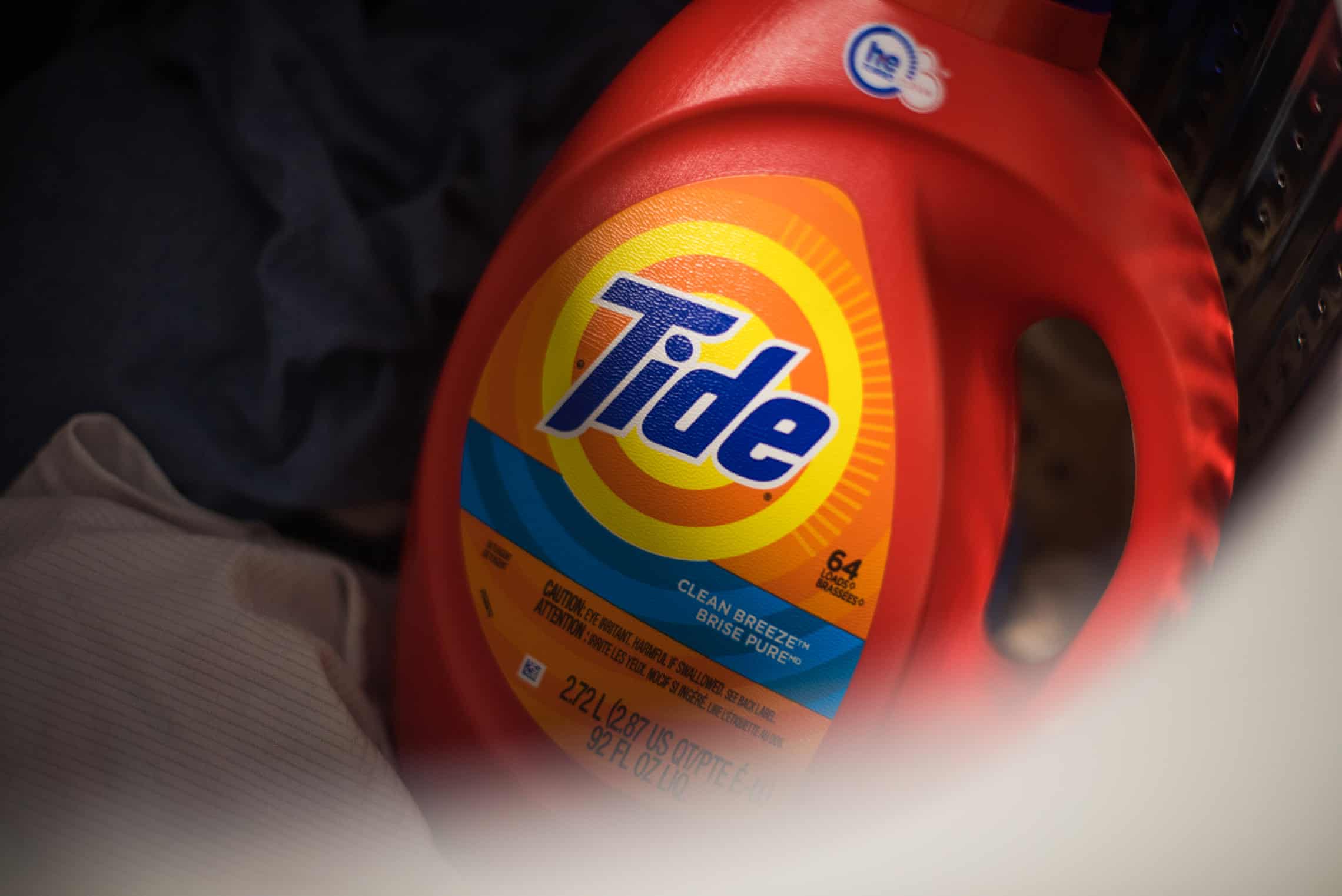
Procter & Gamble will cut up to 7,000 jobs, or approximately 6% of its global workforce, in the next two years as the maker of Tide detergent and Pampers diapers wrestles with tariff-related costs and customers who have grown anxious about the economy.
The job cuts, announced at the Deutsche Bank consumer conference in Paris on Thursday, make up about 15% of its current non-manufacturing workforce, said chief financial officer Andre Schulten.
“This restructuring program is an important step toward ensuring our ability to deliver our long-term algorithm over the coming two to three years,” Schulten said. “It does not, however, remove the near-term challenges that we currently face.”
CFTC leaders exit as Trump pick prepares to take helm
In a series of departures announced in a matter of weeks, the agency’s entire top rung is set to turn over as Brian Quintenz, President Trump’s nominee for CFTC chair, prepares to take the reins.
Commissioners Summer Mersinger and Christy Goldsmith Romero both plan to depart by the end of the week, while fellow Commissioner Kristin Johnson has said she will leave “later this year.”
Acting CFTC Chair Caroline Pham has promised to remain at the agency until Quintenz is confirmed, at which time she too will depart. The commission, which typically has five members, has been short one person since former Chair Rostin Behnam stepped down in January.
The relatively low-profile agency is expected to play a key role in regulating the digital asset market alongside the Securities and Exchange Commission (SEC).
Trump administration says 5.3 million student loan borrowers will have wages garnished this summer
The Department of Education under President Donald Trump began sending notices to the first of millions of Americans with past-due federal student loans that they will see their wages garnished in just a few months. The news comes the week that the Trump administration begins to send millions of defaulted borrowers into collections.
The garnishments will happen in waves, with the first borrowers seeing the pay deductions in early June. Monday, the Education Department started sending 30-day notices to around 195,000 defaulted borrowers to notify them that they will be subject to the Treasury Offset Program, which collects past-due debts owed to state and federal agencies. Under this program, Treasury can withhold money including tax refunds, wages, Social Security payments, and disability benefits to pay delinquent debt.
Later this summer, "all 5.3 million defaulted borrowers will receive a notice from Treasury that their earnings will be subject to administrative wage garnishment," the department says in its first timeline of the enforcement action.
Trump tariffs live updates: China retaliates with 34% tariff as Trump digs in, vows to 'never change' policies
President Trump has played down the shock impact of his tariff shift on markets, which kept spiraling downward on Friday as fears for the global economy grew.
US trading partners have vowed to retaliate after Trump ended months of suspense on Wednesday by revealing broad reciprocal duties on all countries, in what he has referred to as "Liberation Day." On Friday, China announced it will impose countermeasures against the US starting April 10, including a 34% tariff on US goods.
Trump's administration is imposing a baseline tariff of 10% across all countries beginning at 12:01 a.m. on Saturday. The US is upping those duties for various partners whom he described as bad actors starting next Wednesday, April 9.
Trump vowed to "never change" his policies on Friday, even as he touted progress with Vietnam, a country set to see one of the biggest US tariff hits.
More Articles...
Page 2 of 69
Economic Glance